Before the library could officially open to the public, the extensive collection of over 5,000 books and reading materials had to be moved from their old crowded home on the shelves in the rooms above Taylor’s to their new more permanent home on the brand-new freshly varnished shelves just down the road. No records have been found that describe exactly how these books were moved, but one can imagine stacks carried piled to volunteers chins and carts piled high precariously pushed across the rough cobblestone street from one building to the next to finally put in order and shelved by Miss Catlin and Mrs. Dunegan themselves.
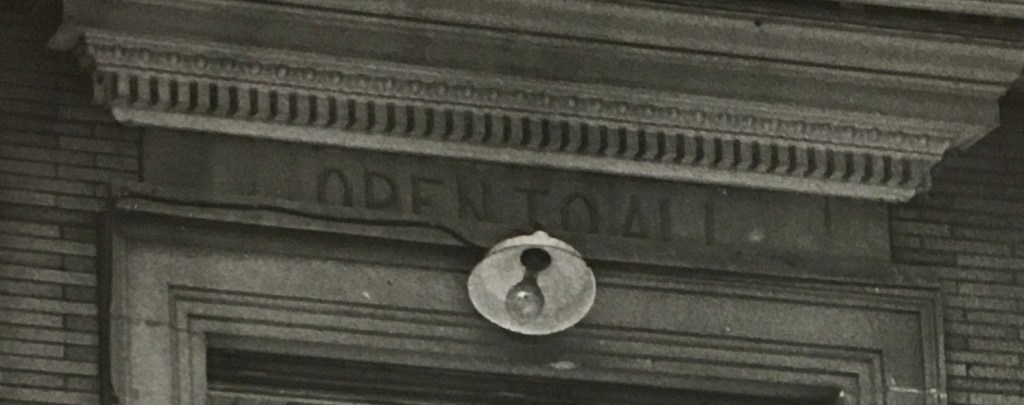
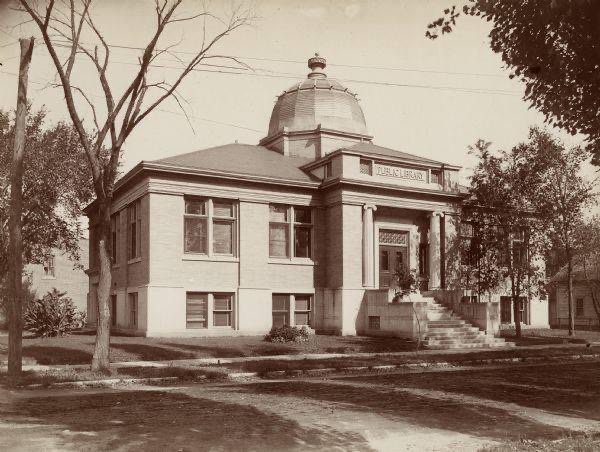
The afternoon of June 1st the doors of Stevens Point’s new Carnegie Library opened to the public for the first time. The words “Open To All,” etched in stone above the entrance greeted the city’s new patrons encouraging all to enter and enjoy. The Union Band was set up in the lobby and an art exhibit of local children’s drawings hung on display in the new children’s reading room. Decorations were hung sparingly not to overshadow the real stars of the event, the building itself and the books on their new shelves.


Post card of the Carnegie Library, Historic Stevens Point Collection
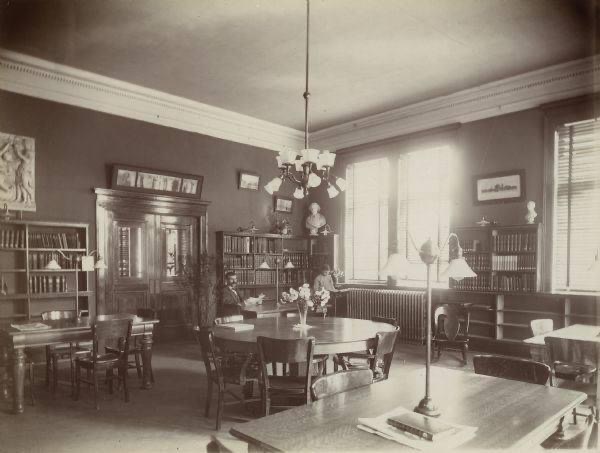
At completion the new library was just as architect drawings showed. The handsome Neo-Classical Revival style building constructed from gray stone and brick was built with a “high basement” to match the height atheistic of the neighboring two-story buildings. The ample stone stairs led to the “broad and inviting” entrance flanked with enormous ionic Roman pillars. Heavy wood doors opened to a wide vestibule with the “librarian’s desk being at the north end of this space.” To the left was a spacious reading room filled with tables and chairs, which housed reference books and the directors’ room. Located in the right wing was the children’s room as well as space for the librarian’s office. The heavily varnished interior woodwork, made from red birch, gave off a warm inviting glow.
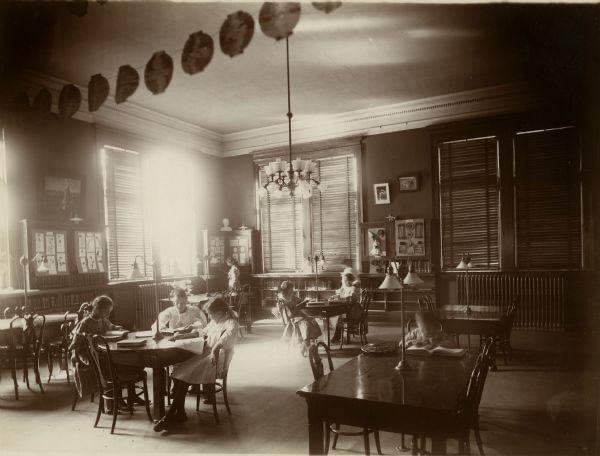
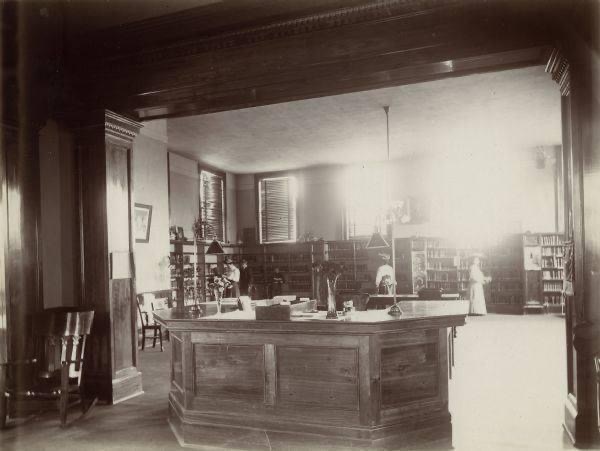
Photos courtesy of the Wisconsin Historical Society.
A rotunda and dome graced the center of the ceiling and roof line of the building with a skylight made from green art glass specially shipped in by train. It must have been a lovely sight to see the light shine through leaving patterns on the polished wood floors. The original plan called for a narrow gallery around the rotunda, “which is approached by a stairway from the vestibule. The walls of this gallery will be arranged with the idea of using the space for hanging pictures,” making it an engaging focal point when looking to the ceiling.

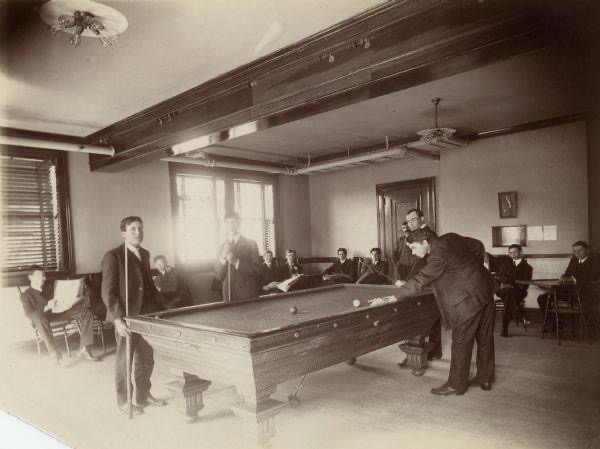
The lower level contained “a lecture hall, a club room for women and a newspaper reading room for men,” as well as a kitchen, storeroom, boiler and fuel rooms, and a librarian’s work room. At some point a carom or French billiards table was moved into the men’s area where boys and men alike gathered to play. Various meetings were held by the ladies in their specified area as well. The Women’s League was very involved in the fundraising for the library and held a permanent contract for their space. Separating the main lower wings of the building was a large open corridor with all three areas able to connect by opening the sliding doors create one large room. The large room was intended to be used for events and lectures for community members.

Gifts from community members were given to the new building as well such as a large potted palm plant and a life-size bust of Shakespeare donated by the graduating class of 1904. But one of the greatest and most beautiful gifts to the library was the donation of a pair of heavy decorative brass and iron doors, a matching iron transom for above the doors as well as a pair of tall ornate brass lamp posts in 1918. Purchased with money left by Andrew Weeks, the doors gave the library quite the grand entrance. Weeks, who had sat on the library board and building committee during the years when the library was being planned. He had also helped raise money for the library fund early on by selling logging land in the Northwoods and then donating it to the cause while the city was preparing to ask Carnegie for the initial donation.
Coming from a successful lumber and logging family, Weeks died with a significant fortune and left for his time and left money specifically for the Stevens Point Carnegie Library. After his death, his sister ensured that the community received the designated $5000 donation in her brother’s name and helped choose the doors, transom, and lamps. The Weeks family obviously thought it was important that the Stevens Point Public Carnegie Library have a grand entrance.
Read Part 1 here / Read part 2 here Read Part 3 here / Read Part 4 here/ Read Part 5 here
 Historic Stevens Point