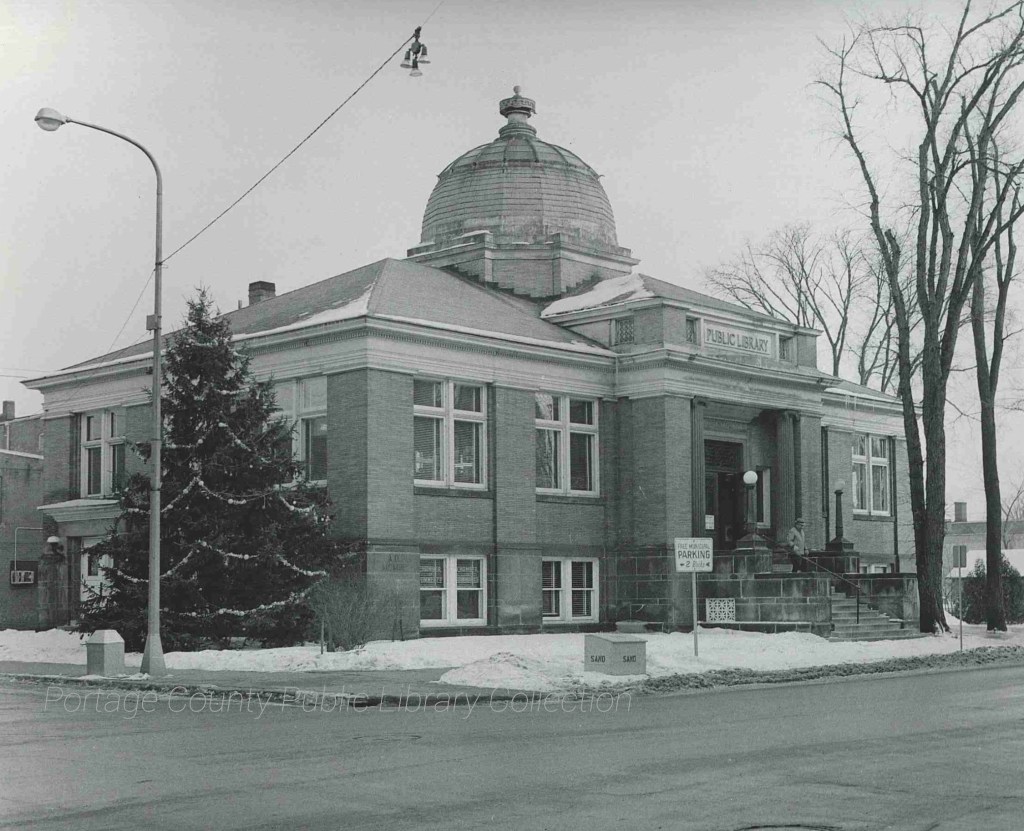
Stevens Point’s Lost Carnegie Library: The Final Chapter

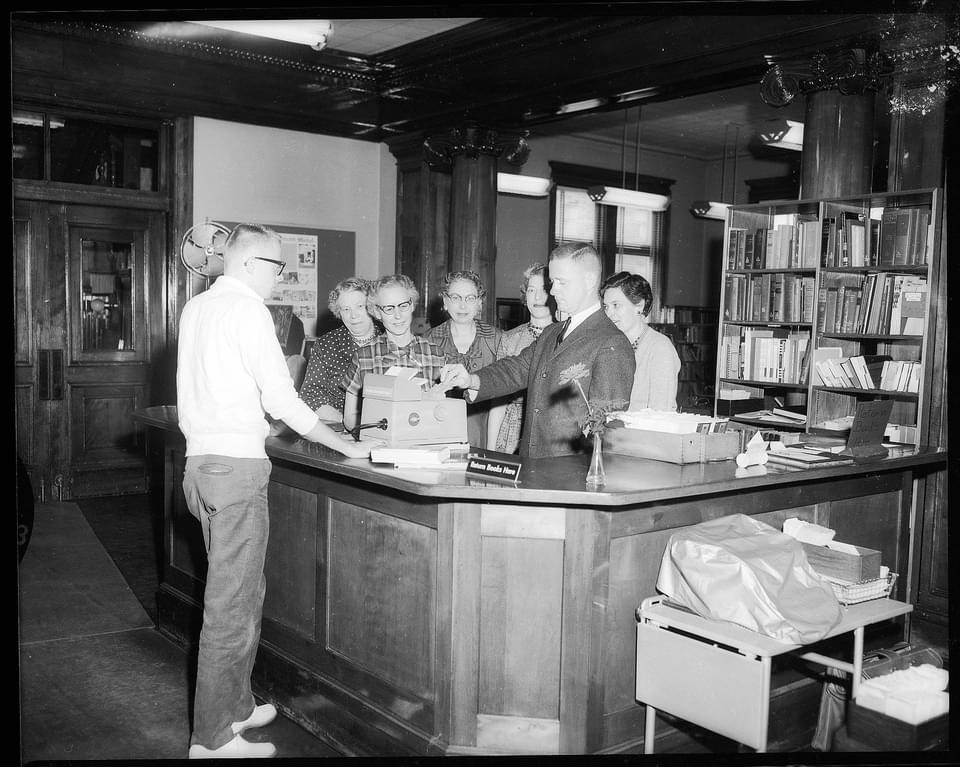
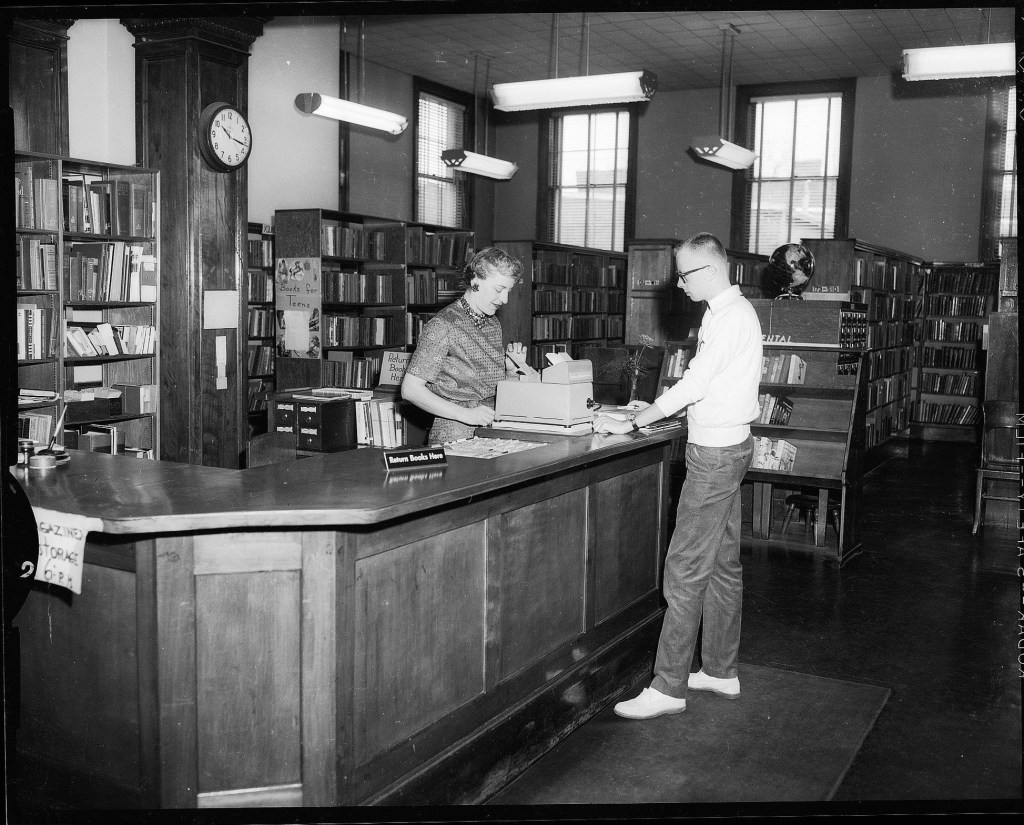
Courtesy of the Portage County Library, circa 1950/60s

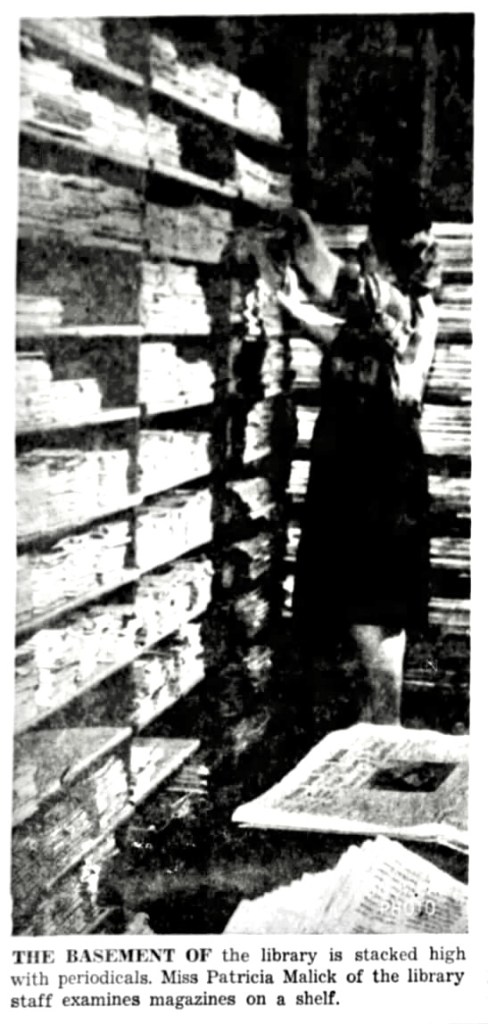
By the early 1960s complaints about overcrowding at the library dominated public discussion. The rotunda once a lovely sight, now called a “bothersome frill” was filled with stacks of bound magazines only reachable through a padlocked gate and the winding old staircase. “Originally, there was an opening in the first-floor ceiling and from the main desk you could look up into the dome. Later the opening was sealed,” and the beautiful special ordered green art glass was covered. Everywhere “book stacks standing where book stacks aren’t supposed to be.” Library officials declared that “the brick structure has outlived its usefulness as a library.”
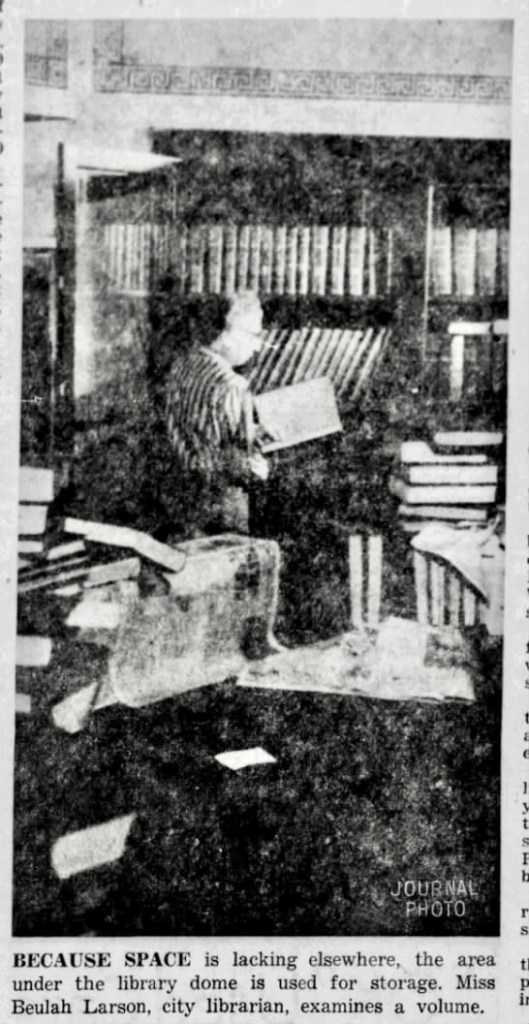
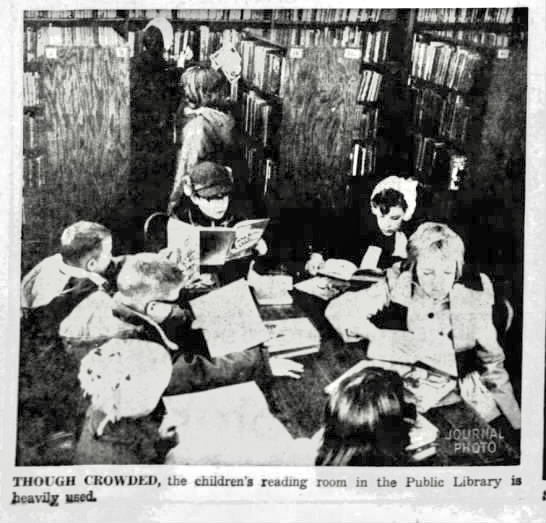
Photos from the Stevens Point Daily Journal, January 24, 1964 showing how crowded the library had become. Stark difference than the 1914 photos posted in Part 4

Complaints of odd angles and no space for growth tabled talk about expanding the original structure. There was a preference to sell the old building and build a new modern library, but funding remained an issue. Then at the end of 1963, Charles M. White died and left $140,000 to the city. His intention was that it be used for a “project or building that will be beneficial” to the people of Stevens Point. Almost immediately it was decided that money would go towards the building of a new modern public library leaving the fate of the Carnegie Library in the hands of whoever purchased the building and land.

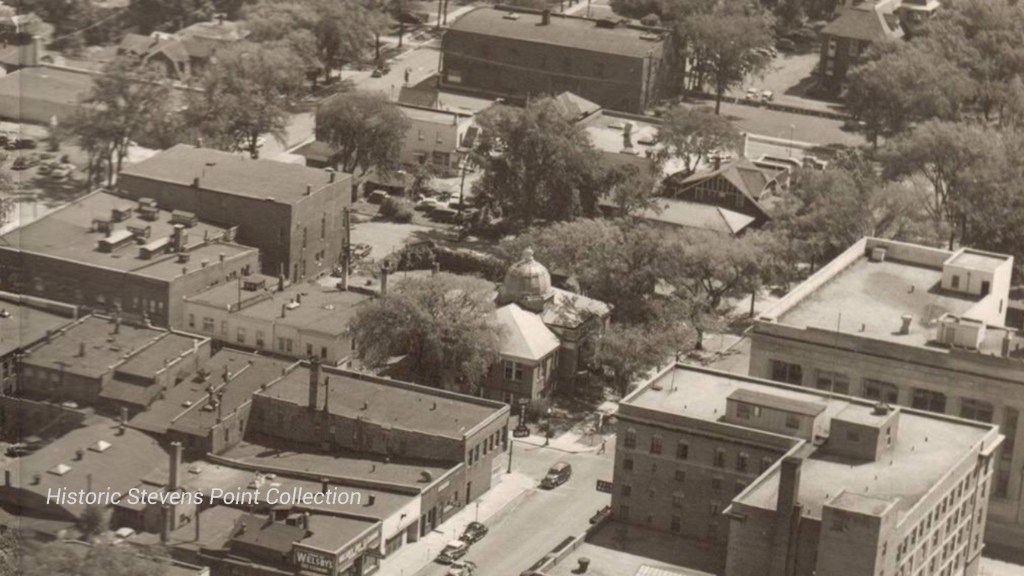
In April of 1966 construction began on the new Charles M White library at the corner of Church and Clark Streets, a historic corner where the city’s first church was built in 1853. It was also, ironically, next to where the high school burned in 1892 when the library lost half of its original collection. The new library would be built in the Brutalism style, a steep contrast to the Neo-Classical Revival styling of its Carnegie Library sibling just down the road.

At the end of December 1967, Stevens Points Free Public Carnegie Library closed its heavy ornate doors and prepared for the move. Once again, the immense collection of books moved to a new home just down the block and once again, they found a new home on new shelving leaving the dusty old worn varnished shelves behind to meet their fate.
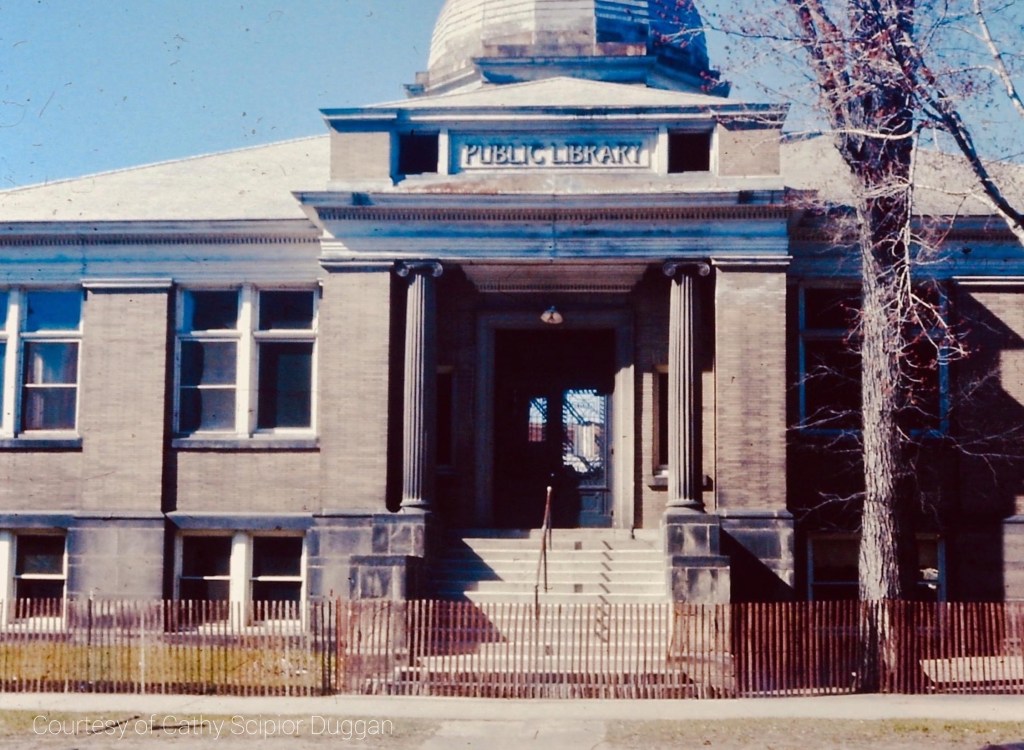
The Beginning of the End, Circa 1968, Photo courtesy of Cathy Scipior Duggan

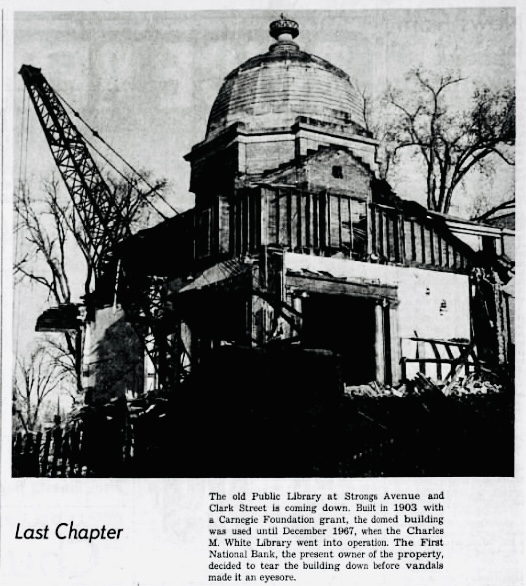
The building was sold to the First National Bank and sat empty for a few years. Then in April of 1969, the bank decided to demolish the building citing worries about vandalism. With that quick decision, one of the most important beautiful buildings to ever grace Stevens Point met its end nearly 65 years to the day of when Dr. Southwick received official word from Andrew Carnegie’s secretary. Nothing would be built on the land again, and today the site is covered in concrete and blacktop.
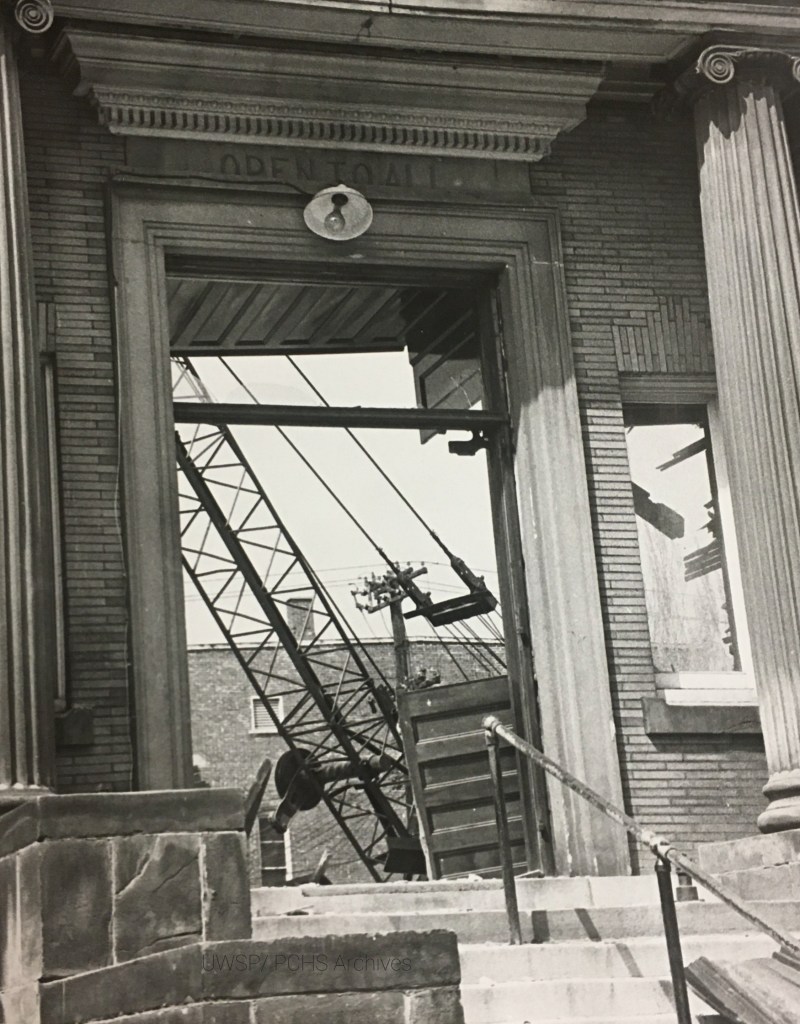
Open to All, yet forever lost to time
Mike Dominowki photo, UWSP / PCHS Archives

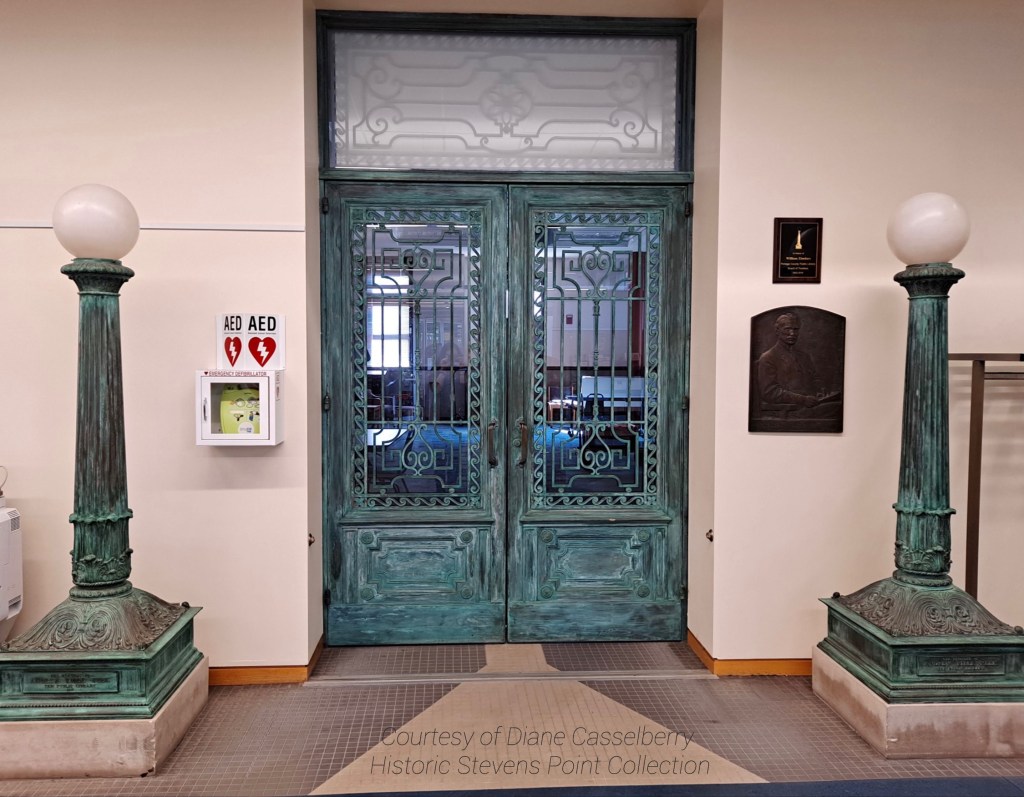
Mostly memories and photos remain, but you can still imagine a bit what it would have been like to walk through the enormous beautiful ornate brass doors of the original entrance. The doors and lamp posts were thoughtfully salvaged by those who realized their importance. Saved by local historian John Anderson and stored in the basement of the Old Main Building at the University, the doors safely sat and collected dust for a few decades. The lamp posts continued to be used and were moved to the front of the new Charles M White Library. Later, the lamp post silhouette was incorporated into the library logo. When the third and present library was built in 1992, the brass doors were dusted off and finally brought out of storage and given a new home. The lamp posts were reunited with the doors over a decade later completing a “new” library entrance and once again, “Open to All.”
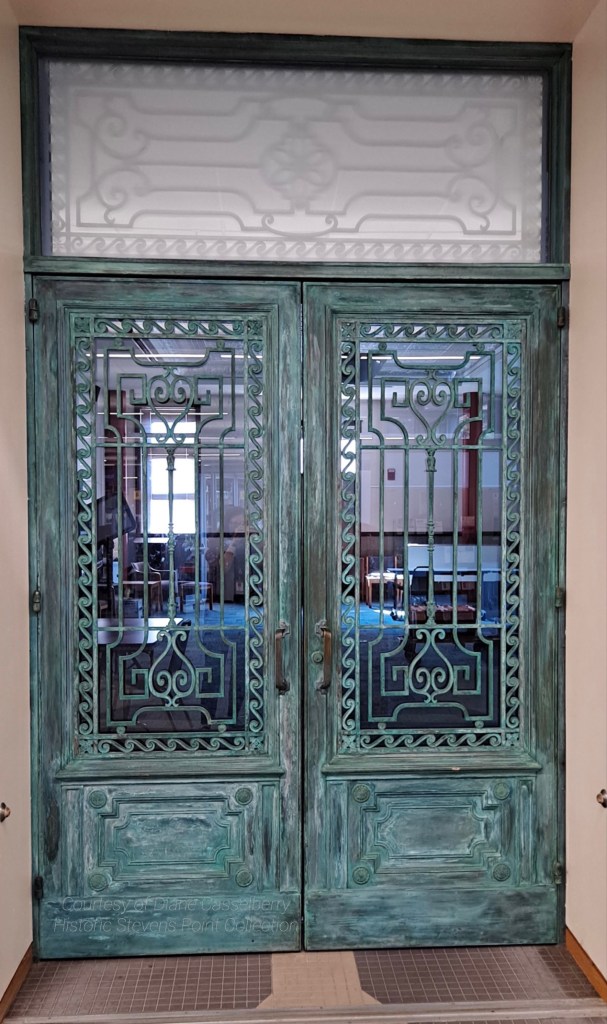
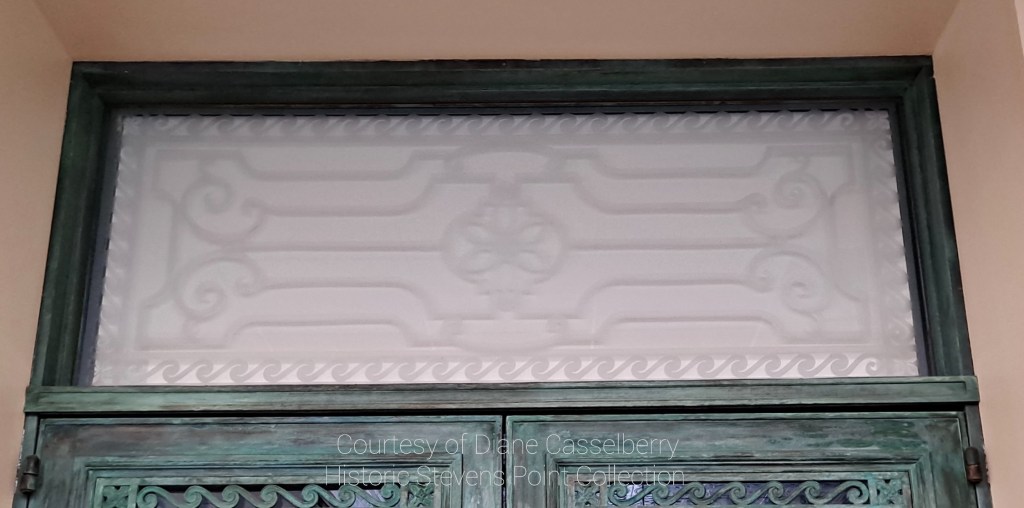
The entrance to the Pinery Room meeting space, specifically designed to hold the doors, gave the library a beautiful grand entrance once again. Unfortunately, the transom that hangs above the doors is not original and it is a fabricated replicate based on the door design. Today the original hangs in the home of a private citizen, and at the time was not available for public display. The replica is slightly different than the first transom, but one would not know without seeing the original.  Regardless of the differences, the current transom beautifully helps to complete the imagery of literally walking through the doors of another time. You can almost smell the books and hear the creaky floors.
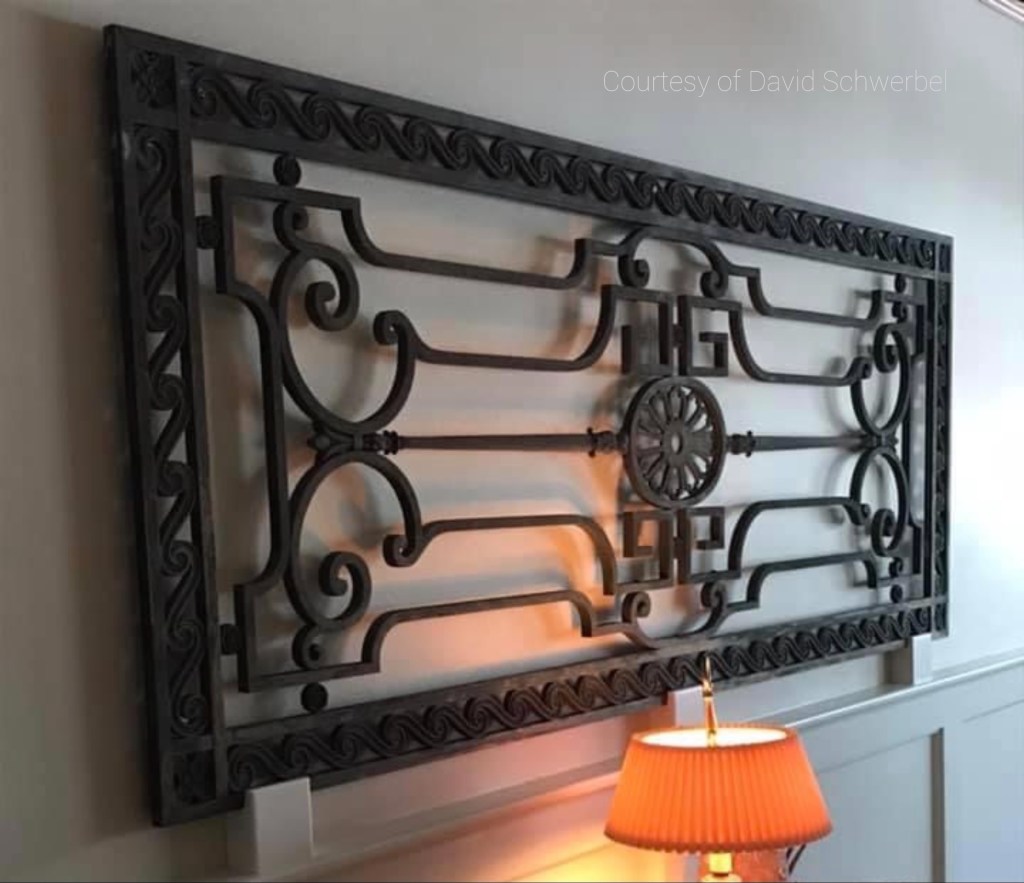
The Original Carnegie Library Transom, Photo courtesy of David Schwerbel

The Stevens Point Carnegie Library is a more than a memory from the past, it was more than a building to many, it was an ideal, open to all, that brought a community together and gave its citizens a beautiful place to grow and learn. Locals today fondly reminisce about the smell of ancient books, the sound of the creaking wood floors and the dark varnished wood. Many do not remember the Carnegie Library, nor know it even existed at all. With only stories and artifacts to share, it is important to keep the memory alive of this lost nearly forgotten building of historic Stevens Point.
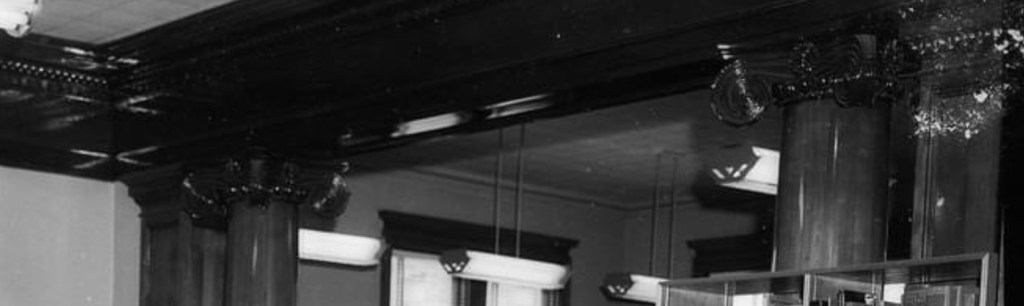
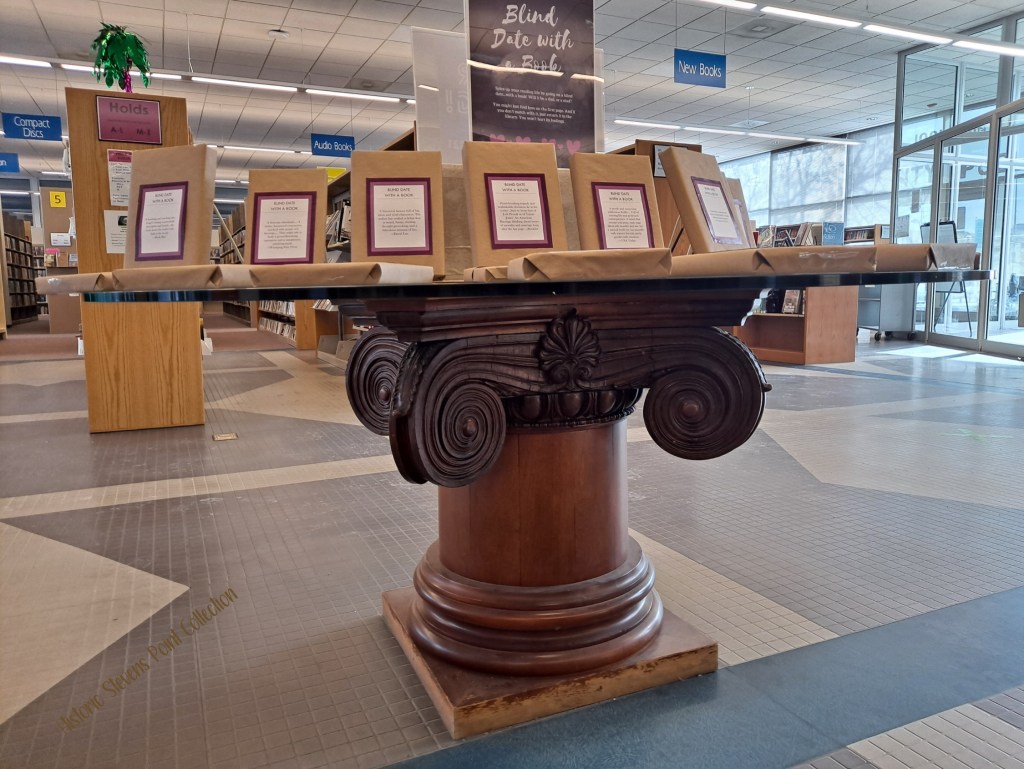
The only other known remnant of the library is the top of one the interior columns which is used as a display table base today at the current Portage County Library building. UWSP /PCHS Archives .
Photo Courtesy of Diane Casselberry of the Portage County Library
UWSP /PCHS Archives
UWSP/PCHS Archives

We would like to extend our gratitude to Diane Casselberry, Linda Kappel, Bruce Barnes, and the late Wendell Nelson for their gift of information and photos while we worked on this piece about Stevens Point’s Lost Carnegie Library. Without their contribution this article could not have been possible.


Read Part 1 here / Read part 2 here Read Part 3 here / Read Part 4 here/ Read Part 5 here
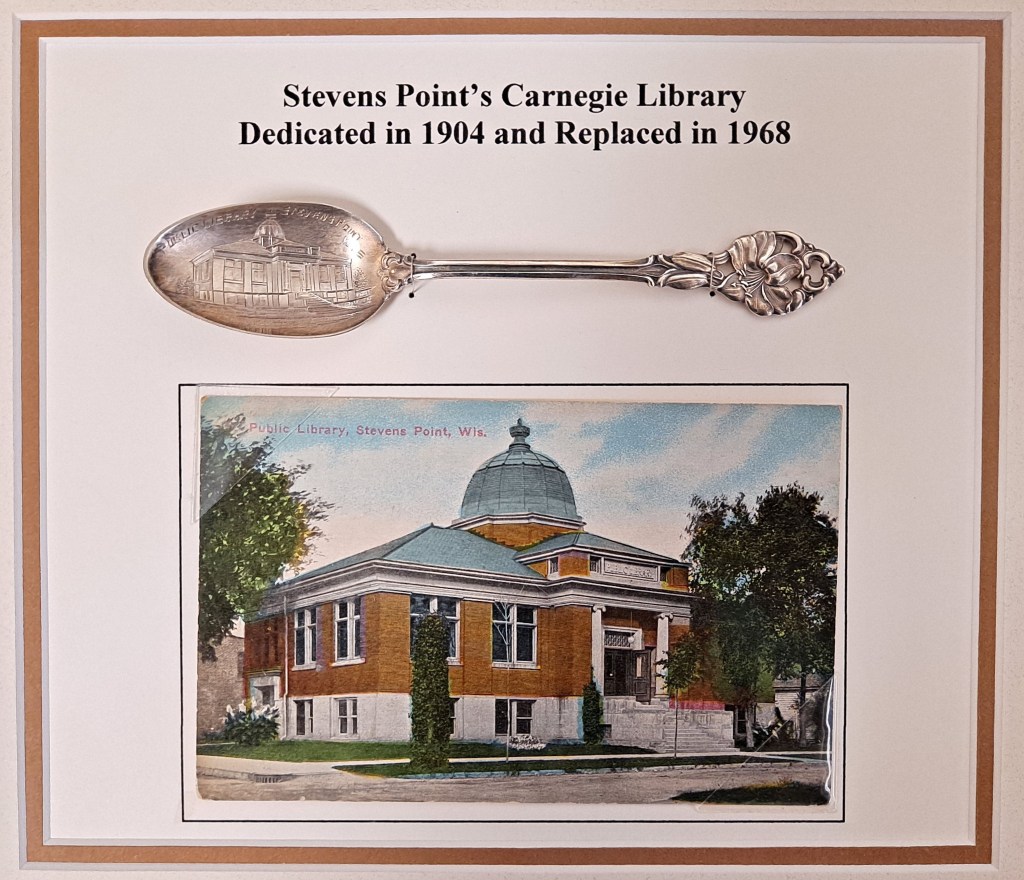
Framed postcard and souvenir spoon displayed in the Portage County Library, photo courtesy of Diane Casselberry
Circa 1953, photo source unknown at time of publishing
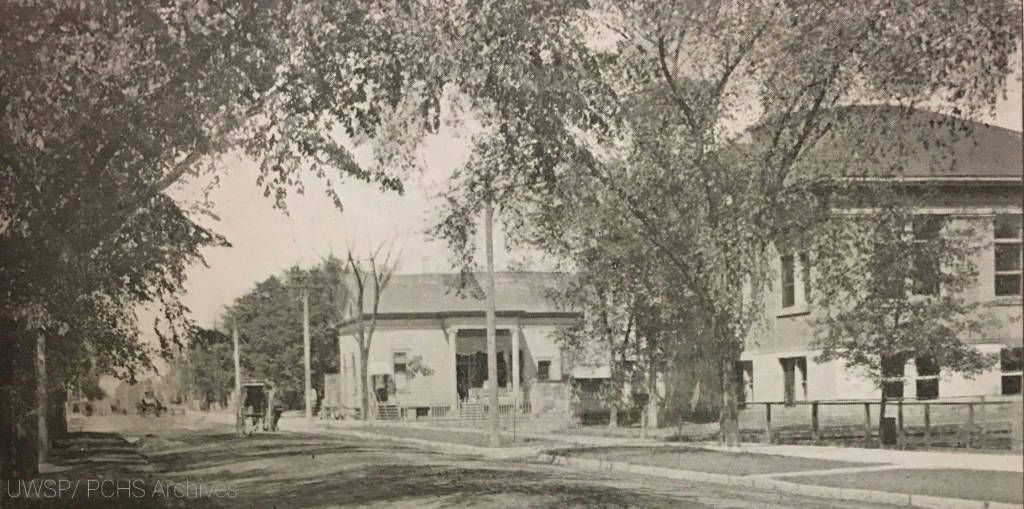
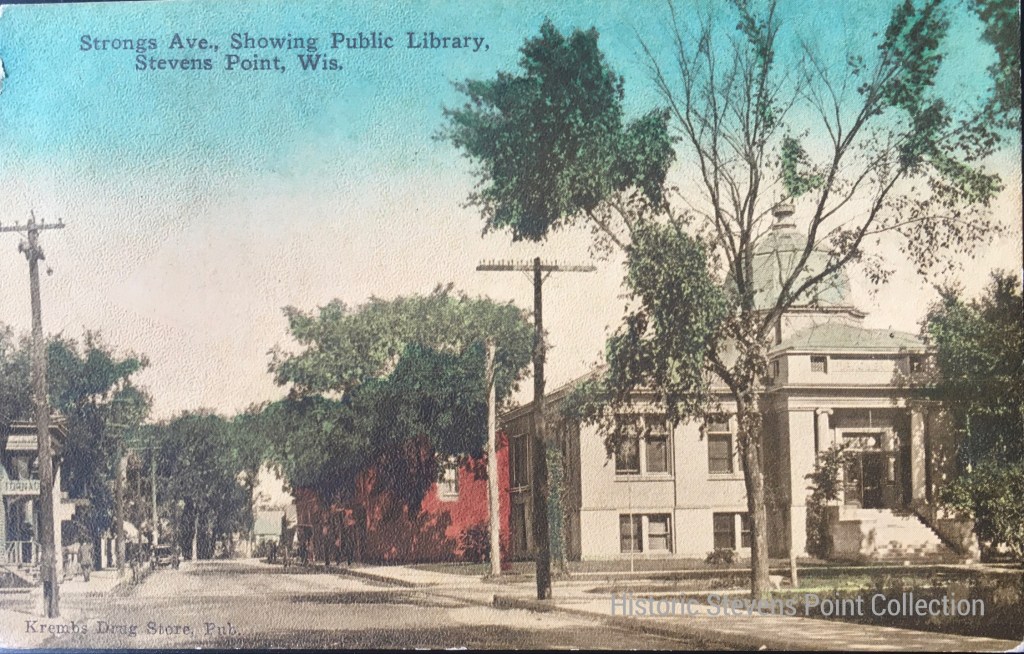
Post card with view from Clark Street looking west towards Strongs Avenue, circa 1908,
UWSP/ PCHS Archives
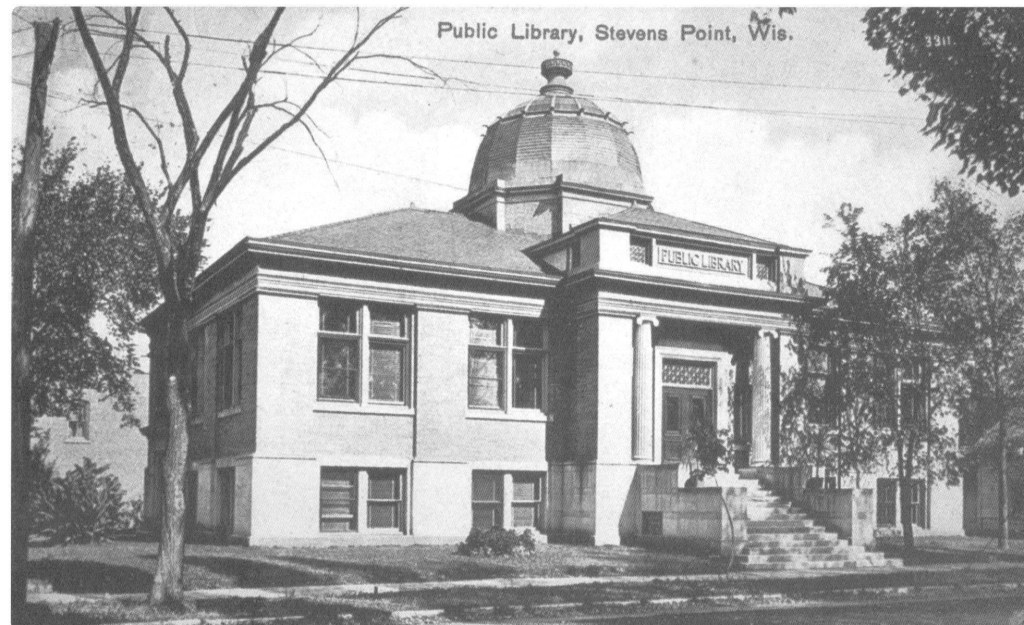
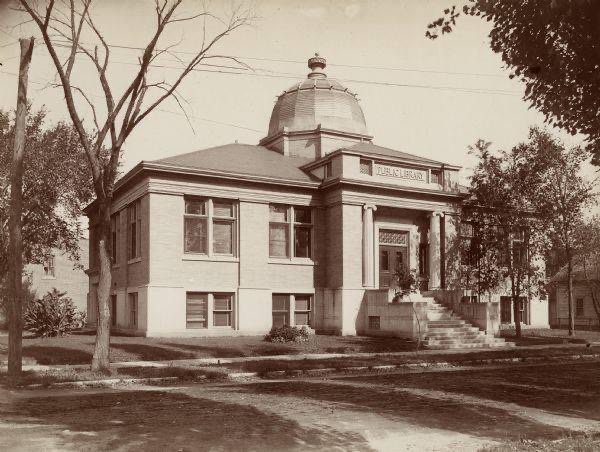
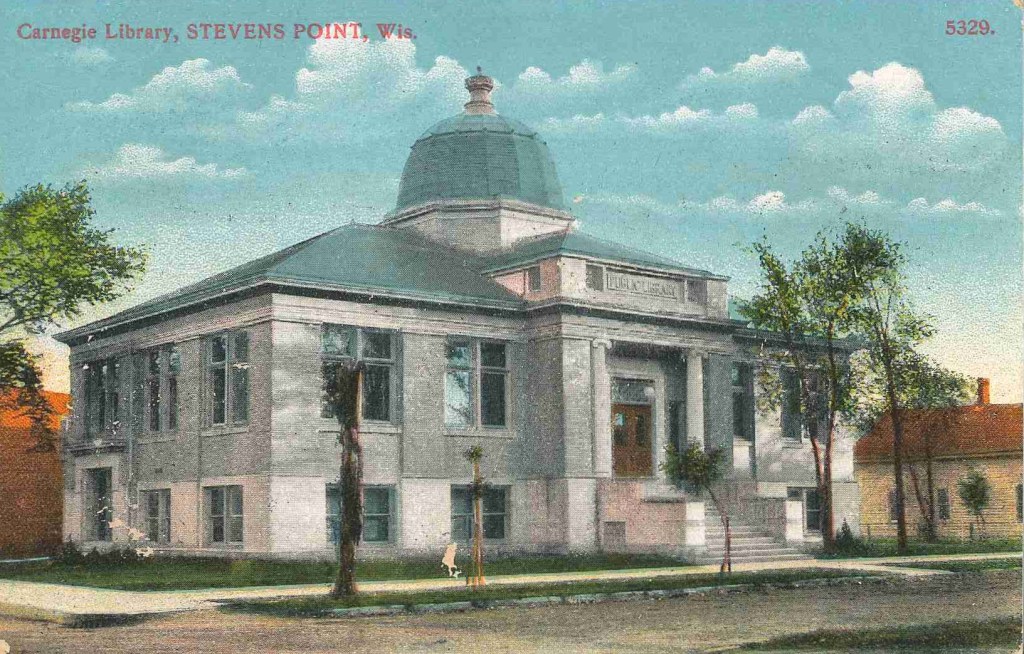
This early post card image shows a good example of the original doors and transom before the Weeks donation. Pre 1910, UWSP PCHS Archives
Pre 1910, Wisconsin Historical Society
Post card looking north on Strongs Avenue towards Clark Street, circa 1910,
Historic Stevens Point Collection
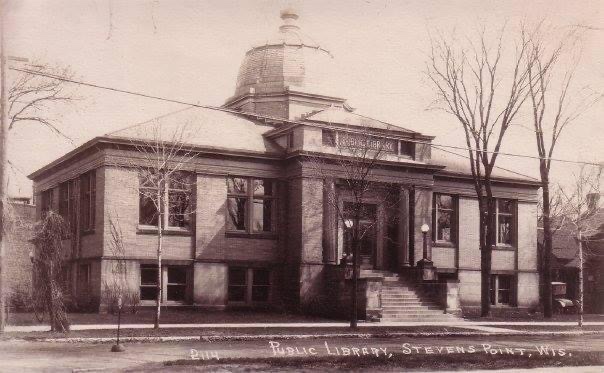
Circa 1910, original source unknown
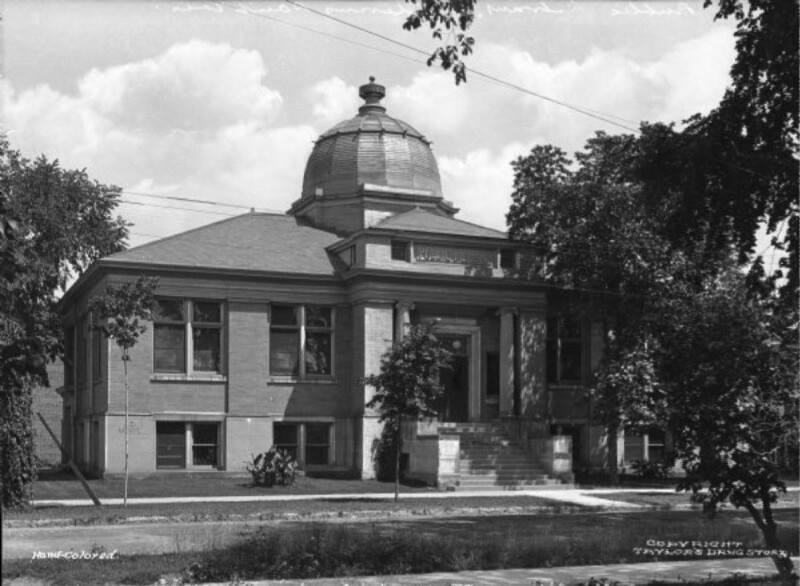
Circa 1914, Wisconsin Historical Society
Note the lamp posts and the car parked at the right, Circa 1920, UWSP PCHS Arcives
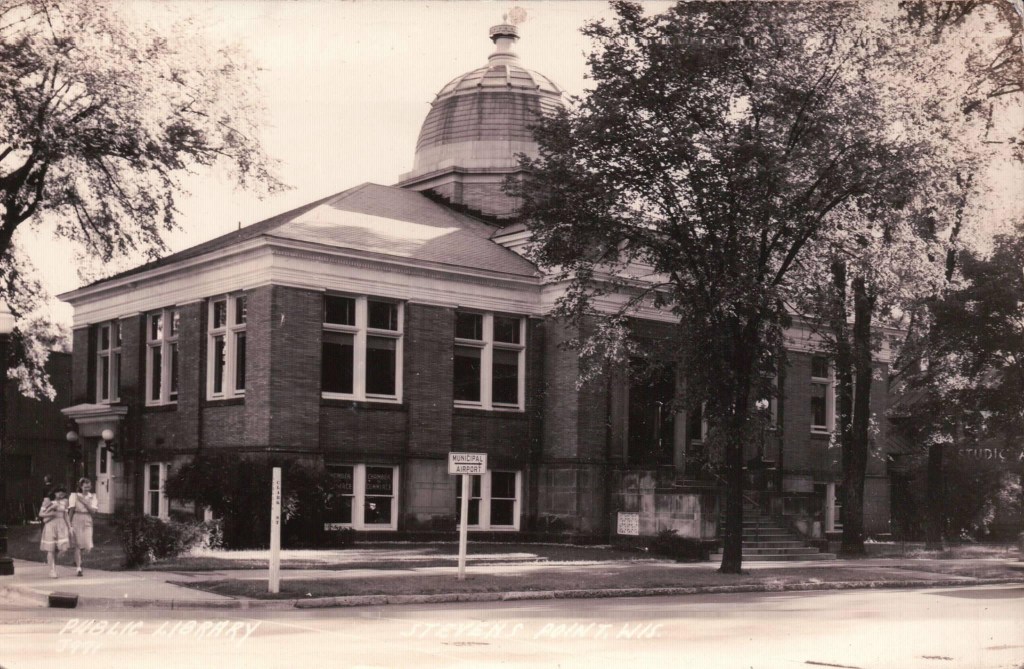
Circa 1950s, UWSP PCHS Archives
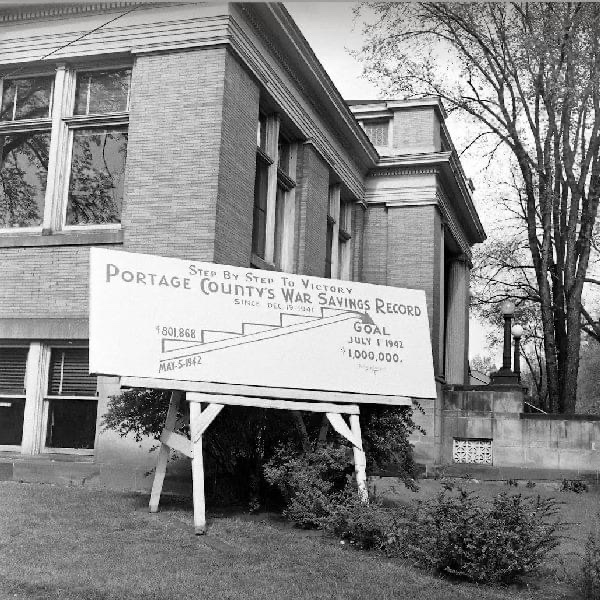
Life Magazine circa 1942
Stevens Point Daily Journal, April 30, 1969

Sources used over the entirety of this piece:
Stevens Point Daily Journal
The Portage County Gazette
Wendell Nelson Papers
Portage County Library Archives
Wisconsin Historical Society Archives
UWSP / PCHS Archives
Sandborn Fire Insurance Maps
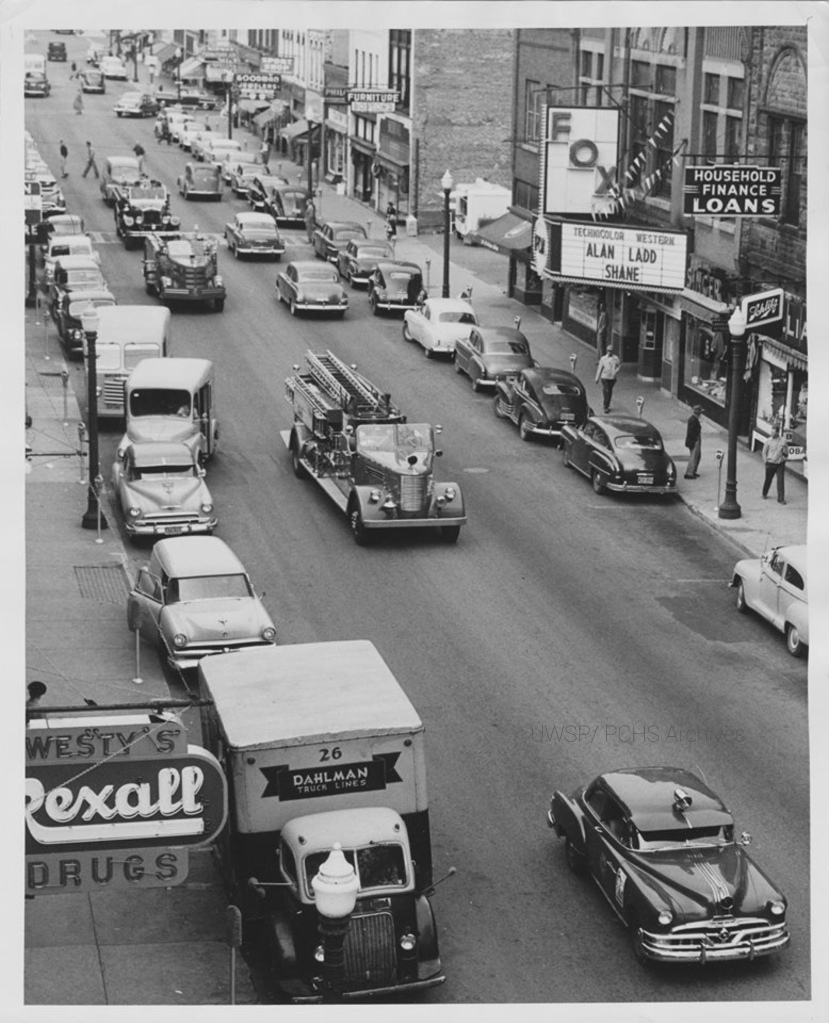
“This is Our Town,” Stevens Point’s Lost 1953 Promotional Movie

Downtown Stevens Point circa 1953, courtesy of the UWSP / PCHS Archives

During the fall of 2016, while going through a box of VHS tapes and DVDs, UWSP Archivist and Records Manager, Brad Casslelberry, found two curious film canisters of 16mm film. With only the label “Stevens Point,” to identify them, you can imagine that Casselberry was absolutely intrigued. He soon tracked down and repaired a 16mm projector so he and staff could view the film.

As the film projector sputtered to life, after the initial film credits, paired with quintessentially 1950s music, an aerial view of the city came into focus. The fly over showed a view of the old court house and the Hotel Whiting, then came the voice over, “This is our town, Stevens Point, Wisconsin, USA.” Casselberry knew right away that they had something extremely special on their hands. And he could not wait to share it.

Robert M. Carson produced at least fifteen “This is Our Town,” promotional films during the 1950s for various cities across the nation including Chippewa Falls, Oshkosh, and Eau Claire, in Wisconsin. The movies were directed by different people, but most often Beatrice Berry wrote the simple yet informative scripts and Thomas J Valentino composed the delightfully quintessential mid-century score. Berry has been lost to history, but Valentino continued to produce music and won a Grammy for a song in “Saturday Night Fever.” Carson went on to produce a movie starring Cesar Romero, better known as The Joker in the 1960s television series “Batman.” All the films are written with the same format, with the same background music, with similar scripts featuring business and industries as well as many local members of the community at work and play.

“This is Our Town: Stevens Point, Wisconsin” mentions at least 100 local residents by name as well as numerous businesses and firms popular during the time. It is speculated that Carson’s production company sold sponsorship to local businesses to be featured in the films, but it has not been confirmed. Carson and his staff traveled across the country pitching their promotional films typically to local Chambers of Commerce. It is unknown how the Stevens Point Chamber of Commerce used their version of the film or if it was publicly shown, but we do know that in 1957 it was shown to sixth grade students from the Central State College Campus School as part of a study unit on Stevens Point “as a good place in which to live and work.”

Casselberry felt strongly that this film should be shown and made available to the community. “That’s the whole point of an archive, to preserve history and be able to share something like this without barriers,” he said. Holder Printworks of Madison digitized the film in 2016 making the movie easily accessible to the public. There are copies of the hour long film available to borrow through the library. It is also available on YouTube and has been embedded below. The film has been shown a number of times publicly, without charge, and we are proud to share it here with you again, on our website.

Please enjoy “This is Our Town: Stevens Point, Wisconsin, USA”

Sources used:

Stevens Point Journal, Oct 18, 2016
Garden City Telegram, Sep 30, 2014
World Cat Identities
A Brief History of 16mm Film

Special thanks to the UWSP Archives

A Short Abridged History of the Thomas Anderson Family and Their Stevens Point Homes

Most small town history and genealogy intersects in multiple ways, often crossing interesting people with interesting buildings. Such is the case of Mr. Thomas Anderson. He had associations to the Brown family who helped establish Rhinelander and whose farm was located where the University’s Old Main building stands today, as well as his own Anderson Rhinelander family relations. He also has local connections to another well-known Stevens Point family and links to three beautiful homes, two of which he had built and still stand today.

Thomas Wesley Anderson married Lucy Bortel in 1852 and soon after went to work with his brother-in-law, his sister’s husband, Edward Brown, lumbering on the Plover River. The couple officially came to Portage County in 1857. Anderson later purchased an 80-acre farm in the town of Stockton where he became a successful wealthy farmer, expanding his land to around 400 acres before moving to Stevens Point.

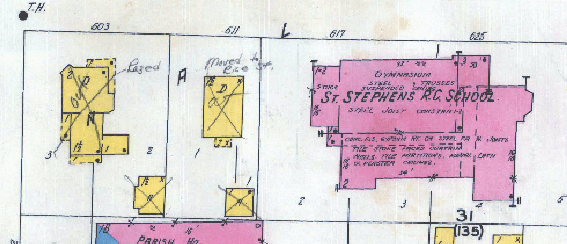
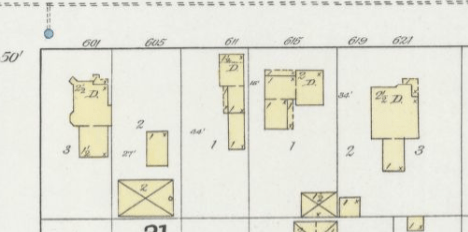
The first home Anderson lived in when he came to Stevens Point in 1889 was located on the southeast corner of Clark and Church Streets, which today is a blacktopped area. No known photos are currently known of the house, but it does appear on several maps as early as 1891 and seems to have been razed around 1950.

Sandborn Fire Insurance Map 1891
Sanborn Fire Insurance Map 1950

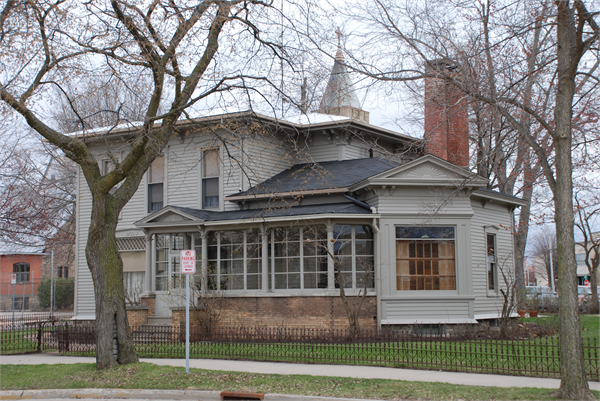
Across from the house at what was 603 Clark Street, on the opposite corner, was the first house he had built in the city, a wedding gift for his only daughter, Ada, and her new husband, none other than Gustav F Andrae. Known as the Sanders or Andrae house today, this well preserved, well known home, located on the southwest corner of Clark and Church Streets, still appears much as it did in 1877 when it was built. This beautiful historic home is one of the rare homes still owned by descendants of the original family.

Courtesy of the Wisconsin Historical Society

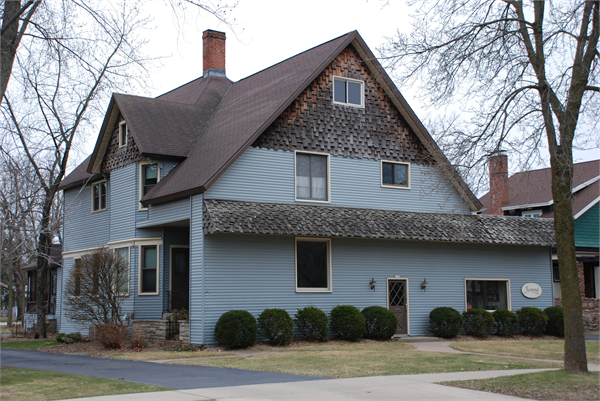
In 1897, Anderson had work begun on the large Victorian Eclectic Queen Anne style home at 1127 Main Street, today 2133 Main Street. The home remained in his hands until his death in 1916. The house passed through his son, Charles, and then family until it ended up being owned by Donald Warner, son of a Hardware Mutual Insurance executive from who he inherited the house, and the first to make extensive changes to the building.

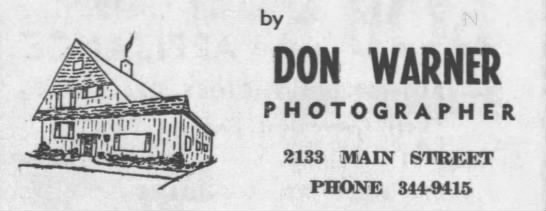
Don Warner ad, 2133 Main Street, TW Anderson house -

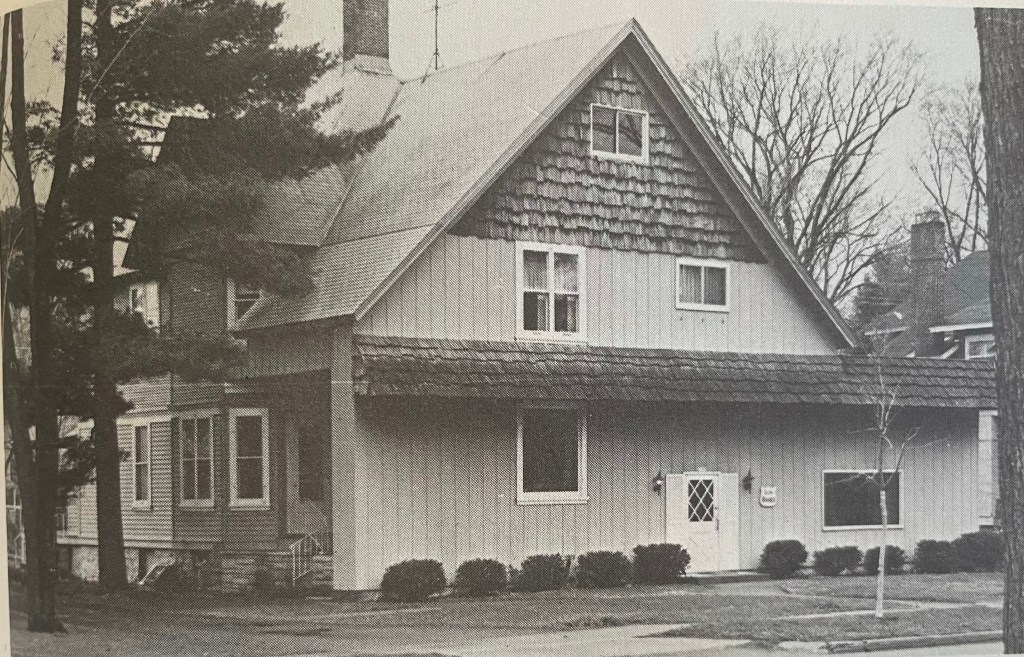
In 1968, Warner, a photographer, expanded the front house to make space for a studio, forever changing the facade of the house. In the 1970s a portion of the house was rented out for living quarters as well. When Don retired in 1976 and moved to Arizona, the studio house was sold to Larry Phillips who operated under the name of Warner Studio. In 1982, Doug Foemmel purchased the property. Foemmel Photography remained in business into the past decade. Last sold in 2018, today it is being used completely as a private residence once again.

Incredibly, in spite of the addition to the front, this home has retained much of its original woodwork and beauty. It is one of two known houses to still have a barn/carriage house on the property in the downtown area, as noted in Wendell Nelson’s invaluable book, “Houses That Grew.”. Located in the newly designated Clark Street Main Street Historic District, this home and it’s interior, on many levels, is breathtaking. We can be grateful to the owners who had taken the care to keep their renovations much in sync with the home’s original interior while adding modern amenities as well as redesigning the front in a complimentary manner. Unfortunately, at time of publishing a photo of the original facade was not available..

2133 MAIN ST | Property Record | Wisconsin Historical Society
Cicra 1990s,
Courtesy of the Wisconsin Historical Society
Circa 1980s, from Houses that Grew by Wendel Nelson, page 145

It isn’t often that one of Stevens Point’s Historic Main Street houses shows up on the market, but when they do, it is a rare opportunity for a glimpse inside the home.

Follow this link to see photos of the current inside of the home on Zillow.

2133 Main St, Stevens Point, WI, 54481 | realtor.com®
The house today, 2021,
Courtesy of Tori Fletcher Schultz

Sources used: Stevens Point Daily Journal, The Portage County Gazette, Wisconsin Historical Society, and Wendel Nelson’s “Houses That Grew”