Most small town history and genealogy intersects in multiple ways, often crossing interesting people with interesting buildings. Such is the case of Mr. Thomas Anderson. He had associations to the Brown family who helped establish Rhinelander and whose farm was located where the University’s Old Main building stands today, as well as his own Anderson Rhinelander family relations. He also has local connections to another well-known Stevens Point family and links to three beautiful homes, two of which he had built and still stand today.
Thomas Wesley Anderson married Lucy Bortel in 1852 and soon after went to work with his brother-in-law, his sister’s husband, Edward Brown, lumbering on the Plover River. The couple officially came to Portage County in 1857. Anderson later purchased an 80-acre farm in the town of Stockton where he became a successful wealthy farmer, expanding his land to around 400 acres before moving to Stevens Point.
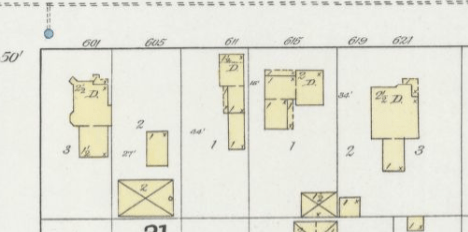
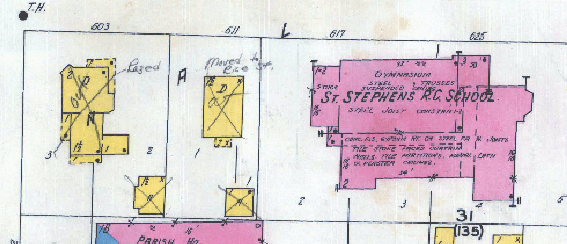
The first home Anderson lived in when he came to Stevens Point in 1889 was located on the southeast corner of Clark and Church Streets, which today is a blacktopped area. No known photos are currently known of the house, but it does appear on several maps as early as 1891 and seems to have been razed around 1950.
Sandborn Fire Insurance Map 1891
Sanborn Fire Insurance Map 1950
Across from the house at what was 603 Clark Street, on the opposite corner, was the first house he had built in the city, a wedding gift for his only daughter, Ada, and her new husband, none other than Gustav F Andrae. Known as the Sanders or Andrae house today, this well preserved, well known home, located on the southwest corner of Clark and Church Streets, still appears much as it did in 1877 when it was built. This beautiful historic home is one of the rare homes still owned by descendants of the original family.
Courtesy of the Wisconsin Historical Society
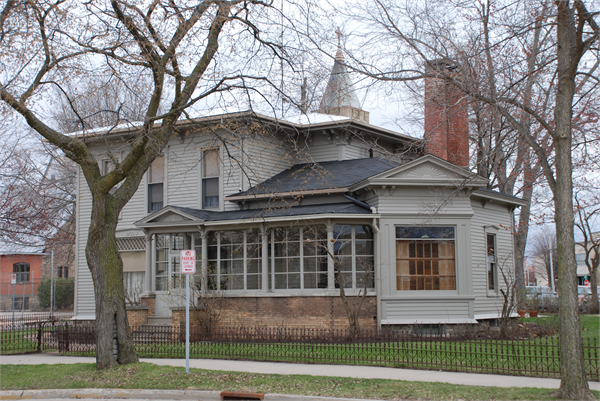
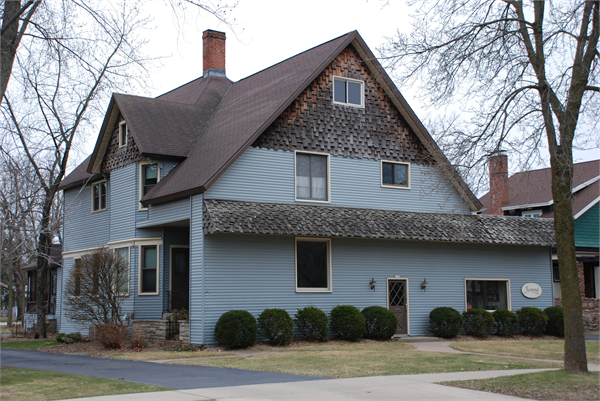
In 1897, Anderson had work begun on the large Victorian Eclectic Queen Anne style home at 1127 Main Street, today 2133 Main Street. The home remained in his hands until his death in 1916. The house passed through his son, Charles, and then family until it ended up being owned by Donald Warner, son of a Hardware Mutual Insurance executive from who he inherited the house, and the first to make extensive changes to the building.
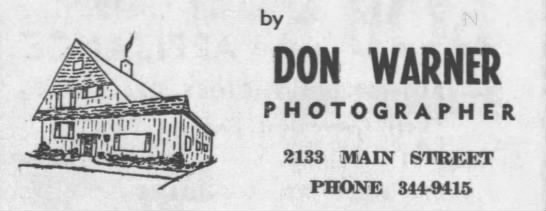
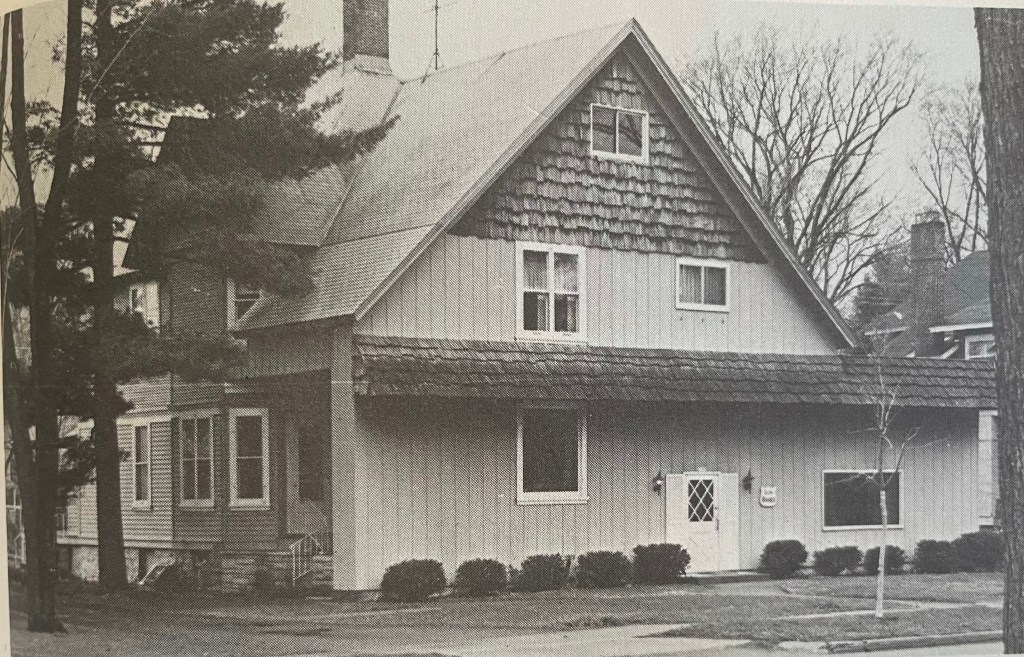
In 1968, Warner, a photographer, expanded the front house to make space for a studio, forever changing the facade of the house. In the 1970s a portion of the house was rented out for living quarters as well. When Don retired in 1976 and moved to Arizona, the studio house was sold to Larry Phillips who operated under the name of Warner Studio. In 1982, Doug Foemmel purchased the property. Foemmel Photography remained in business into the past decade. Last sold in 2018, today it is being used completely as a private residence once again.
Incredibly, in spite of the addition to the front, this home has retained much of its original woodwork and beauty. It is one of two known houses to still have a barn/carriage house on the property in the downtown area, as noted in Wendell Nelson’s invaluable book, “Houses That Grew.”. Located in the newly designated Clark Street Main Street Historic District, this home and it’s interior, on many levels, is breathtaking. We can be grateful to the owners who had taken the care to keep their renovations much in sync with the home’s original interior while adding modern amenities as well as redesigning the front in a complimentary manner. Unfortunately, at time of publishing a photo of the original facade was not available..
Cicra 1990s, Courtesy of the Wisconsin Historical Society
Circa 1980s, from Houses that Grew by Wendel Nelson, page 145
It isn’t often that one of Stevens Point’s Historic Main Street houses shows up on the market, but when they do, it is a rare opportunity for a glimpse inside the home.
With Riverfront Rendezvous under way another year, here is a little back ground on the man behind the name of the green space on the river so loved by our community, Mr Edward Julius Pfiffner.
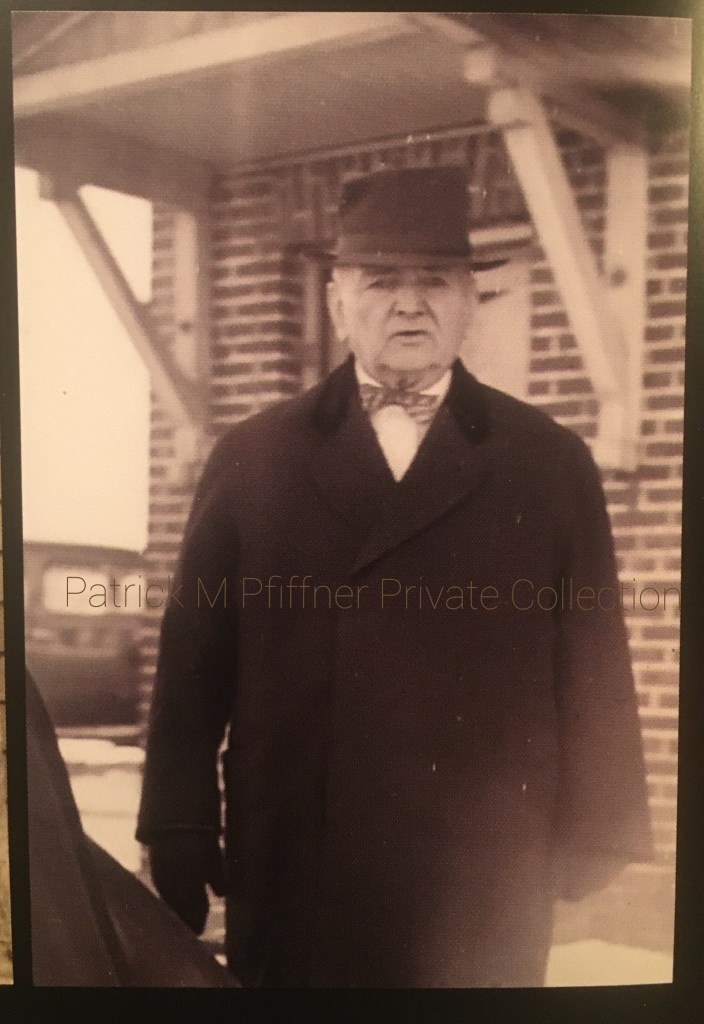
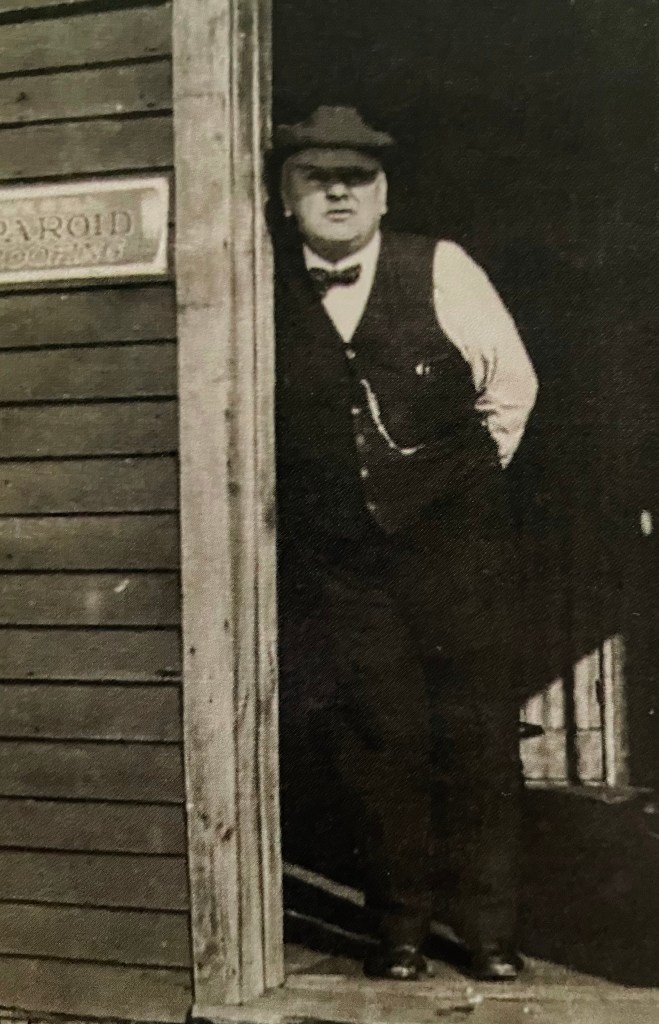
Photos courtesy of the Patrick Meehan Pfiffner Collection
Coming to the area in his youth Edward J. Pfiffner was a self made man who found a trade that suited him well and managed to leave a legacy that still bears his name today.
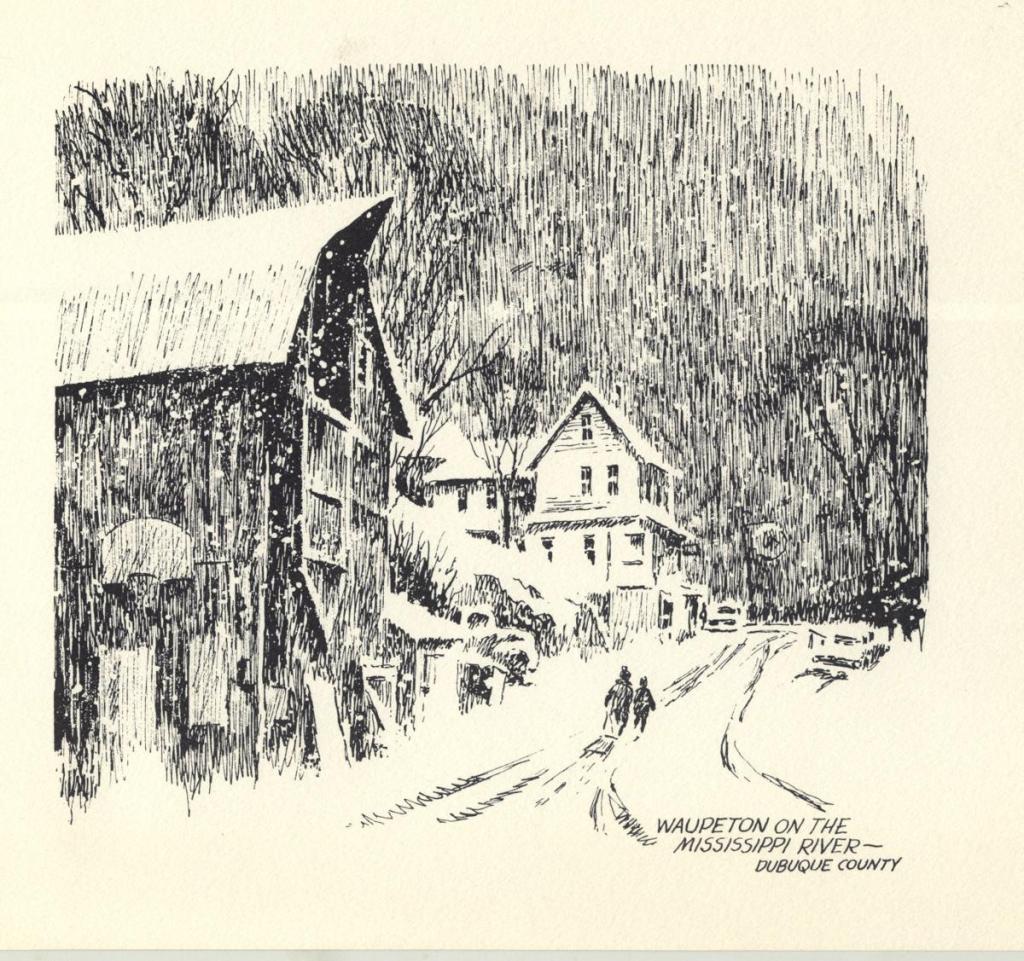
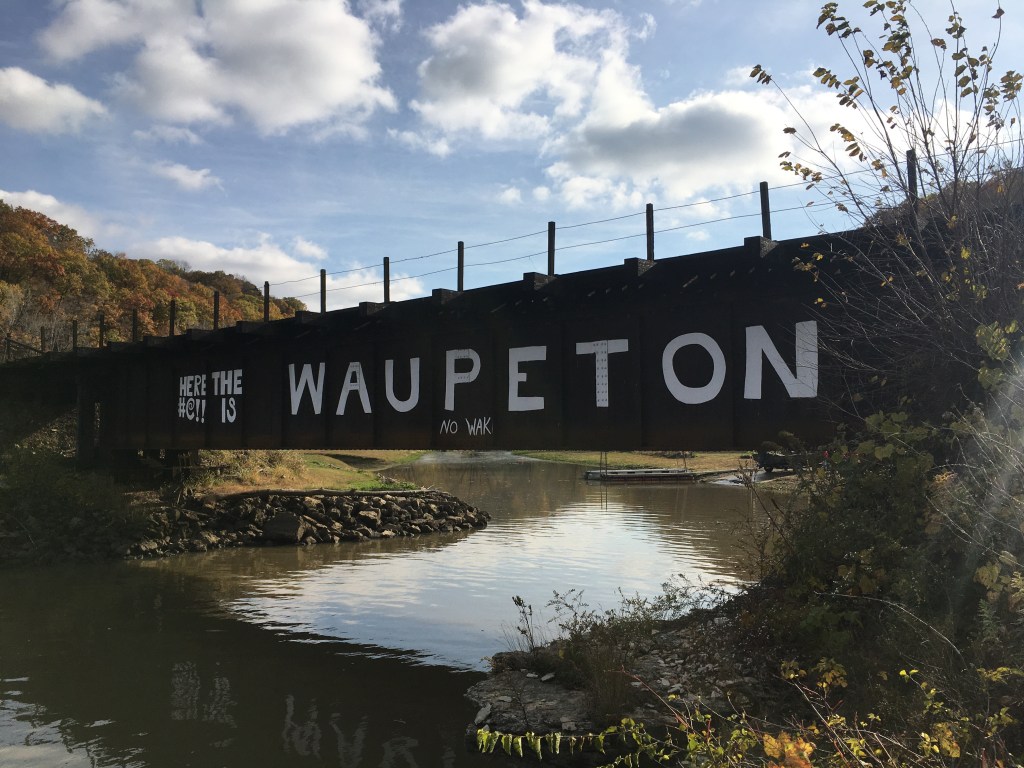
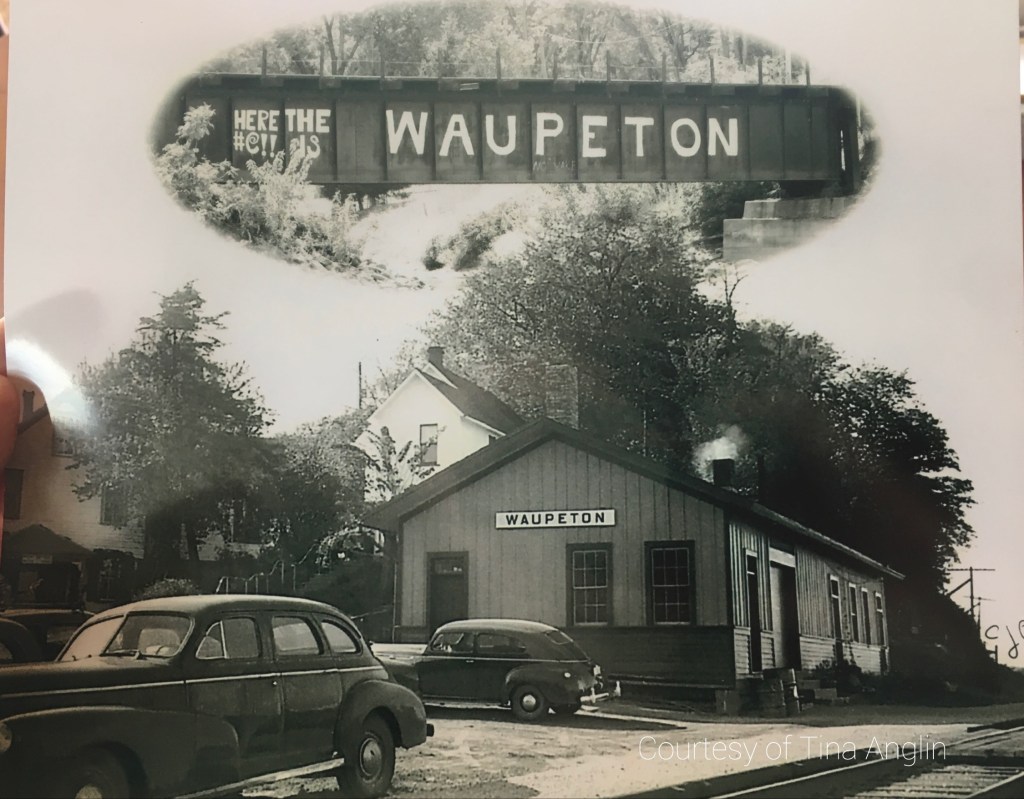
Pfiffner, of Swiss-German decent, was born in Galena, Illinois in 1859 in a house, according to family lore, just down from the pre-war home of Ulysses Grant. When he was just a young baby his family traveled by steamboat up the Mississippi River to the small trading post of Waupeton, located on the Mississippi River’s edge in the township of Jefferson, Iowa.
Photo of sketch of Waupeton, Iowa circa 1950s, courtesy of Tina Anglin, owner of Mile 600, LLC in Waupeton, Iowa
There, on the edge of the Mississippi River, tucked in a small valley, his family had purchased the trading post, where EJ’s father, Joseph Johann Pfiffner, was to become the new postmaster. Working with relatives, the family set up a general store, sawmill, and farmed the land. One of six children, EJ and his siblings helped with the family business and walked three miles up the ridge to the the Rawles farm to attend school in a log cabin. Remarkably, the school building stood until a few short years ago when it was taken down by the family to be stored. The tiny handful of buildings in Waupeton were a common supply stop for loggers riding the rafts down the Mississippi as well as a rest stop for steamships carrying passengers or goods down the river. When the railroad came through, the area also became a popular depot spot for nearby farmers to bring their goods to load onto the trains to send to the markets in Dubuque and further south. The little town still stands today, but is nothing like it was in EJ’s time.
Waupeton, Iowa today is a mostly privately owned camp ground area with a small marina and about a dozen or so seasonal homes tucked along the hillside. Historic Stevens Point Collection
Waupeton Depot circa 1940s, the post office is the building on the right near the thumb indent. We are not sure if this was an original building. None of these buildings remain today. Courtesy of Tina Anglin
Patrick Meehan was a successful lumberman from Portage County who rode the rails as well as the rafts to sell his logs down river and often stopped in Waupeton for supplies. He and his brother, James, owned a sawmill in the present day Linwood area, near the town of Meehan by Plover. While in Waupeton one year, Patrick invited EJ to come to work at he and his brother’s enterprise in Wisconsin. He accepted. At the age of 16, Pfiffner said good bye to the small river valley community, the only life he’d ever known, packed up and made the long journey to the Gateway to the Pineries. Traveling by rail up the Mississippi River from Waupeton to La Crosse, to Grand Rapids (today Wisconsin Rapids), and then wagon to the sawmill, Pfiffner arrived in the town of Meehan at Love’s Creek in 1875. There he worked as a timekeeper, bookkeeper, and lumberjack, sometimes riding the rafts as a river pilot. For the next few years he traveled back and forth between Iowa and Wisconsin, working in both states, spending his hard earned money to attend Baylee’s Business College in Dubuque. By 1877, the family had sold the general store and land in Waupeton, moved to the city, and opened a new general store in Dubuque. EJ helped out often between his time in Portage County and Dubuque.
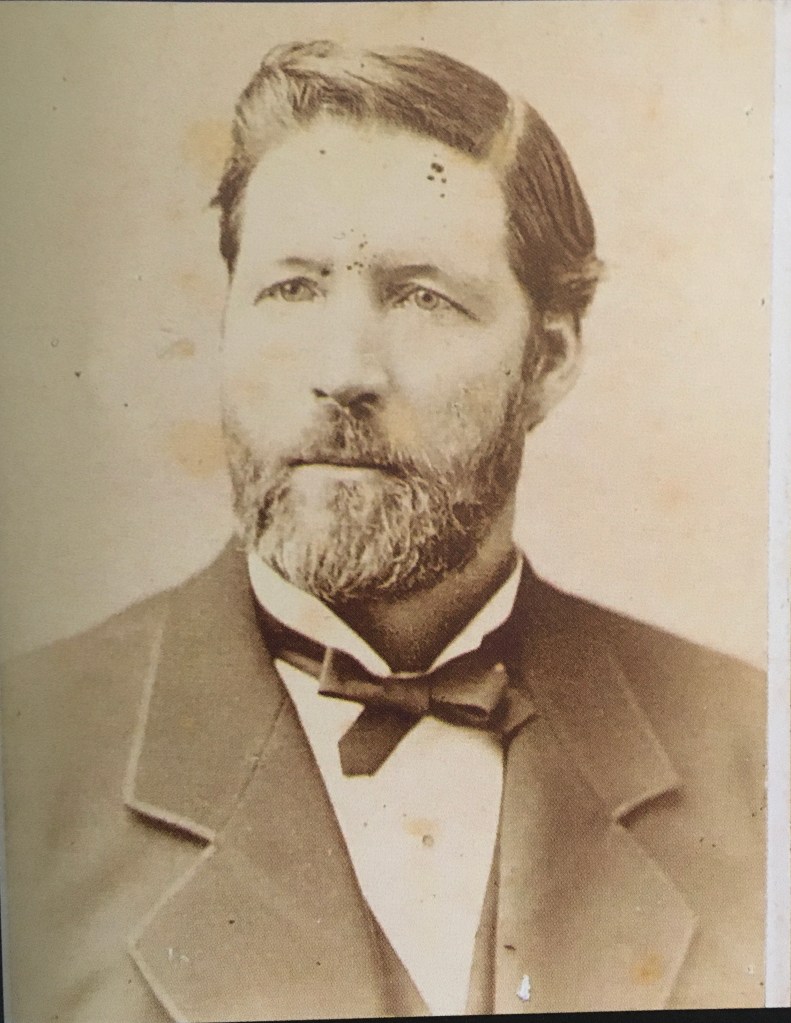
James Meehan circa 1878 -PMP Collection
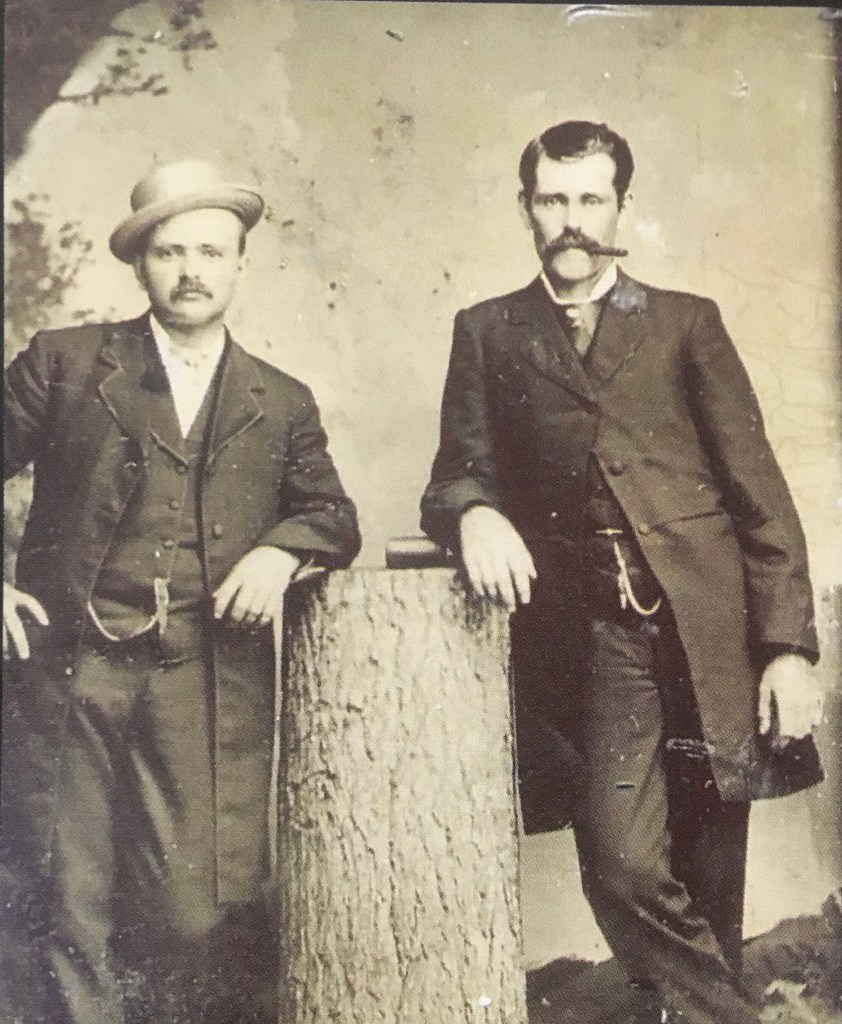
EJ on the left with his best friend Joseph Roe, circa late 1870s likely taken in Dubuque, Iowa. EJ is in his late teens in this tin type photo, probably around the same age he came to Portage County. – Patrick Meehan Pfiffner Collection
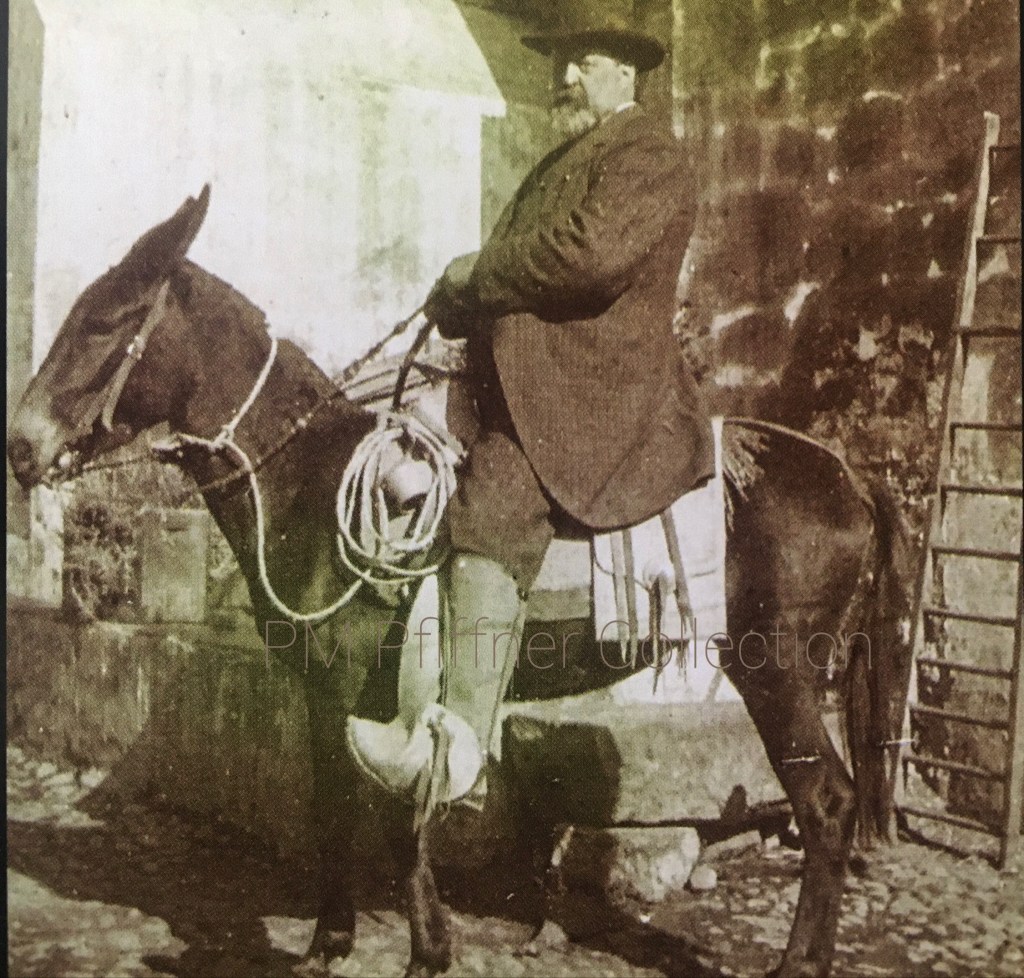
Patrick Meehan circa 1880s in Mexico -PMP Collection
When the Meehan Brothers moved their enterprises elsewhere and then moved themselves to Milwaukee, EJ went to work for Bosworth and Riley and settled in Stevens Point permanently. He married James Meehan’s daughter, Mary Mollie, in 1884 and had three children together: Joseph Roe, named after EJ’s best friend; James Meehan, named after EJ’s father-in-law; and Mary Ramona, named after a popular character in a book of the time. The children all went by their middle names, as did their mother. Pfiffner was know as Ed and Edward by the community.
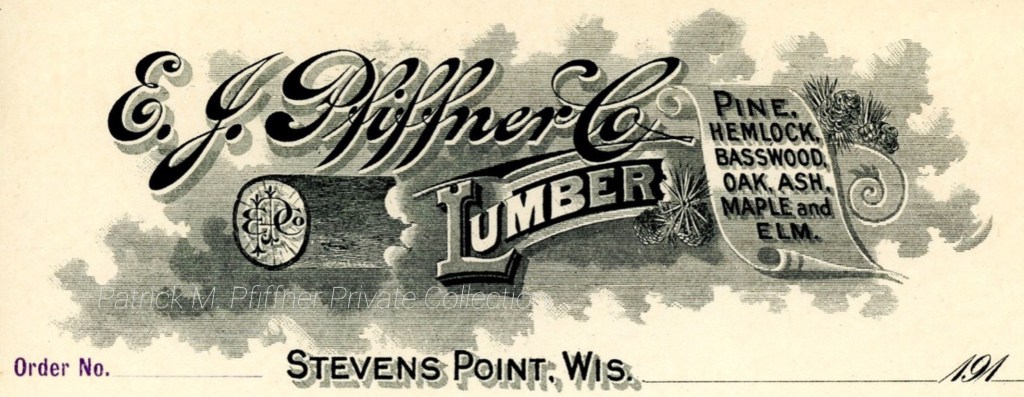
After Pfiffner left B&R, he partnered up to form a new firm, the Fox, Pfiffner, and Keiler Lumber Company, later becoming the Pfiffner and Rounds Lumber Company. The new firm bought out nearby competition, The North Side Lumber company, and purchased the adjacent land, once owned by the Weeks Brothers Lumber Mill, to create what would eventually be would be known as the of the EJ Pfiffner Lumber Company. Pfiffner’s firm reached far into the North Woods as well where he also owned multiple logging camps and sawmills throughout the area. He quintessentially defined what, today, we would call a lumber baron. A small town lumber baron, but a lumber baron nonetheless.
Circa early 1900s. Courtesy of the Portage County Historical Society
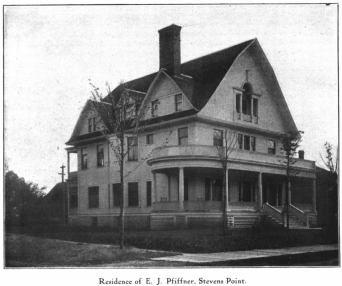
Solidifying this title, in 1898, sparing few luxuries, Pfiffner had the enormous Queen Anne style house on Strongs Avenue and Court Street built for his family. There are stories of his children and grandchildren playing basketball in the third floor ballroom. Pfiffner was a political man, publicly declaring his support for Grover Cleveland’s run in the 1896 election. For many years he served as alderman as well as sat as president of the council and was a member of the school board. Pfiffner was also a founding member of Citizen’s Bank serving as president for nearly 20 years. The Pfiffner family remained involved in Stevens Point politics and business for decades as well as becoming a major player in the establishment and success of the Hotel Whiting. His son Joseph Roe became city district attorney and James Meehan continued on with the family lumber business, and later the hotel business. Ramona graduated from the the State Normal School, married, and moved to the Milwaukee area. Mary Mollie died in 1920 from complications from pneumonia likely due to the Spanish Flu epidemic.
After EJ died in 1948, James Meehan sold the family home to a funeral company and moved into the hotel. The lumber company closed in 1956. Today the Pfiffner Family home is privately owned, and houses bi-level apartments on the second floor and ballroom area and business suites on the main level. Few original pieces of the original interior remain. In 1968, the lumber company land was donated to the city by EJ’s son, James Meehan Pfiffner, and his daughter, Mary Ramona Pfiffner Gallagher, to be named in honor of their father and to become the beautiful park we know and love today.
Patrick Meehan Pfiffner Collection
EJ and his wife Mary Mollie Meehan Pfiffner are buried in St Stephen’s Cemetery.
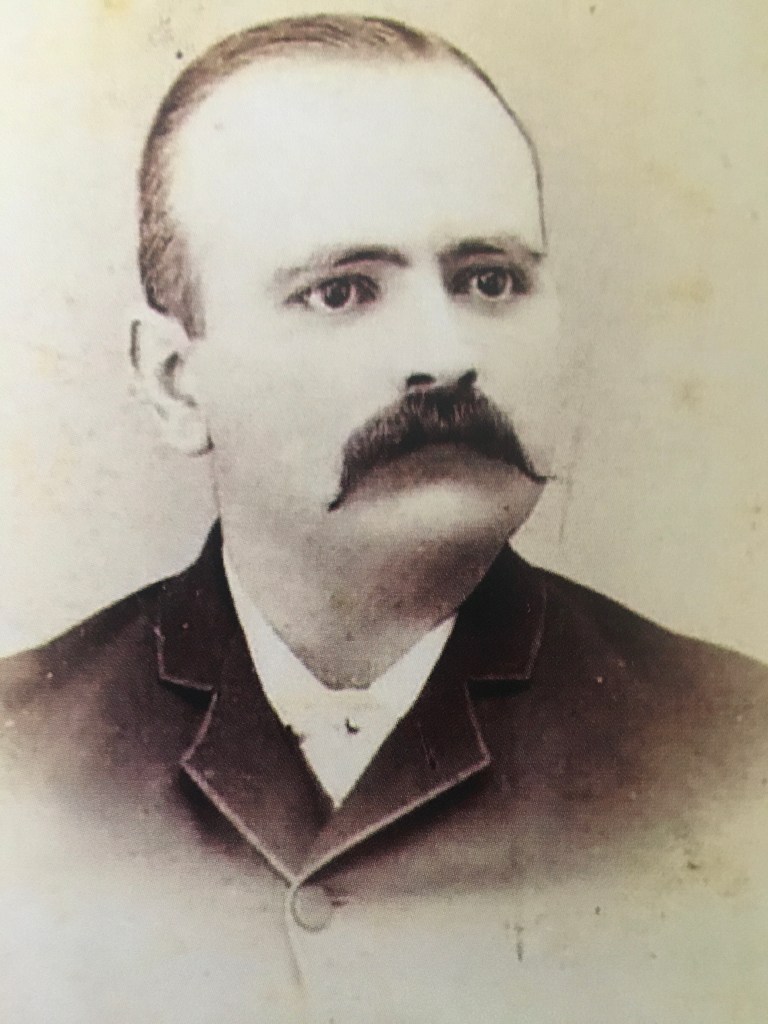
Edward Julius Pfiffner 1859-1948, PMP Collection
Mary Mollie Meehan Pfiffner circa 1875, 1858-1920 PMP Collection
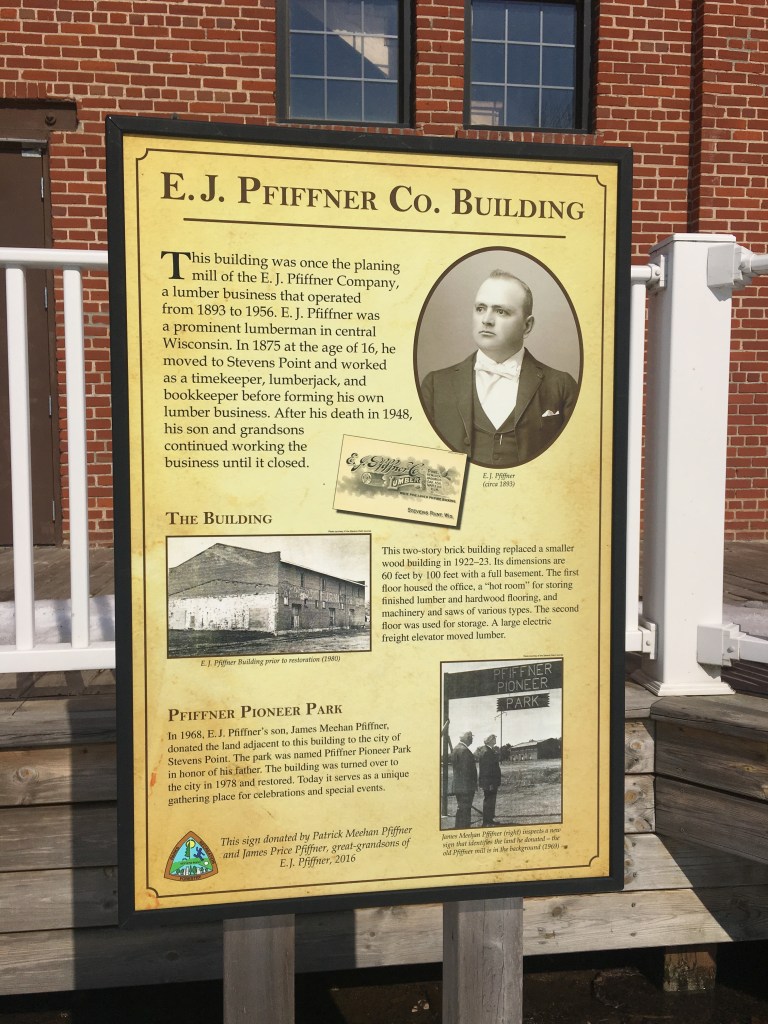
If you’re at Riverfront Rendezvous and by the brick building this weekend, make sure to stop and read the plaque erected by the Pfiffner Family.
Historic Stevens Point Collection
Note: This post is an abridged overview of the history of EJ Pfiffner, his lumber company, and his family. Pfiffner was an amazing self made man with an extensive history. This is just the beginning on our work on he and his family. Pfiffner and his family appear in the local newspapers almost daily during their peak years. At least one out of every generation since EJ has enjoyed success and has a story to tell. We hope to touch on many over the course of time.
*This work would not be possible without the incredible knowledge and collections of Patrick Meehan Pfiffner, great grandson of EJ, who has endlessly researched the Pfiffner family for decades and for whom we are forever grateful.
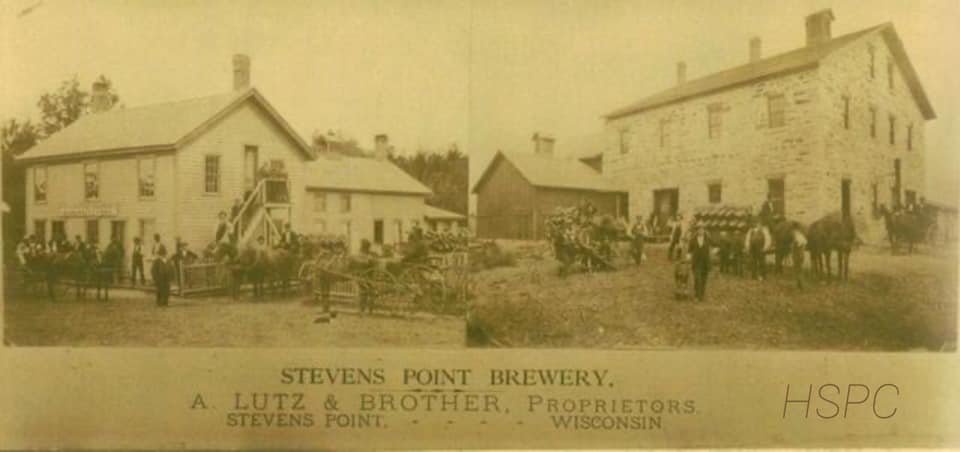
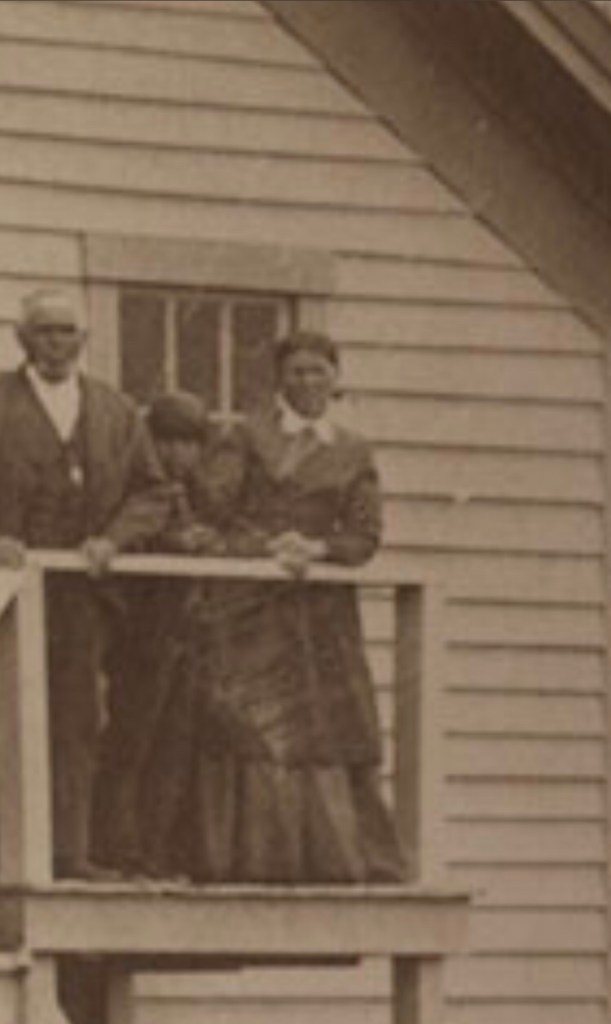
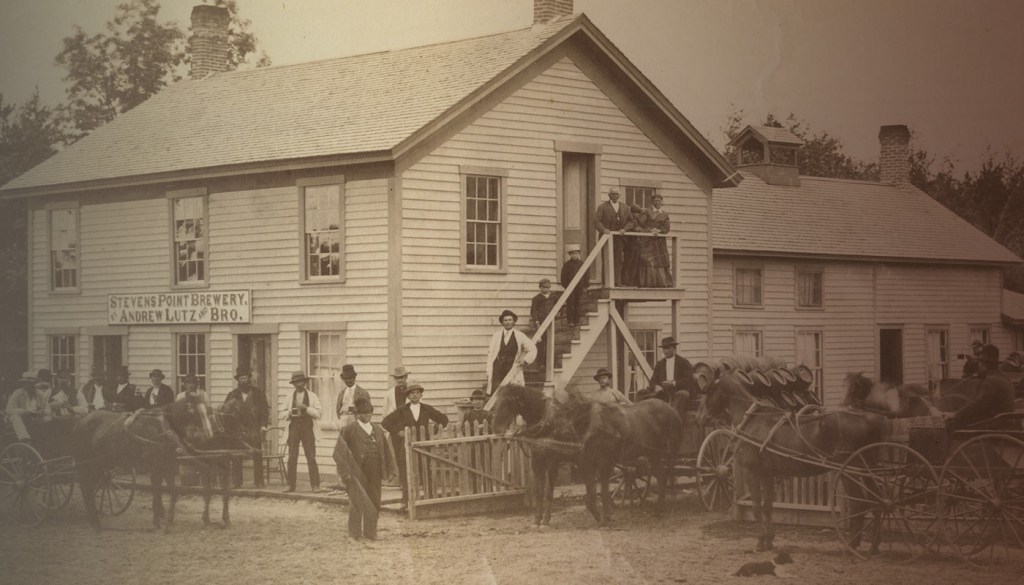
A vintage postcard with photos of the Stevens Point Brewery, Andrew Lutz Sr & Brother, proprietors. A very clear version of the photo on the right appears on the Stevens Point Brewing Company’s website today. The first photo is circa 1867 or so based on the woman’s civil war era dress who is standing on the stairs. It is probable that she is the wife of Andrew Lutz Sr who is likely the gentleman standing to her right. And it is likely that it is their children standing on the stairs in the photo. Andrew and Jacob Lutz owned the brewery together until Jacob left to purchase another brewery in Grand Rapids, present day with their brother, David. That brewery was in Grand Rapids, present day Wisconsin Rapids. Jacob ran it and a saloon until his death in 1901. Andrew stayed in town and owned the Stevens Point Brewery for for 30 years.
Founded in 1857 by George Ruder and Frank Wahle, the company was sold to the Lutz family in 1867. The family owned the brewery as well as a few saloons, like the Lutz House, with rooms to rent, located on the south east corner of Water and present day Park Streets. Another saloon associated with the brewery and family was located at the north east corner of Strongs Ave and Park Street, where the Congress Club stands today. Business was a family affair. Most all Lutz family members lived on site at the saloons or worked at the brewery in some capacity. It is said that Lutz’s beer rivaled any brew in Milwaukee.
During the early 1870s Loren Kuenzl (sometimes known as Lorenz or Lawrence) was brewmaster at the Lutz’s brewery. He had come to America from Bohemia around 1871 and then Stevens Point shortly after. When Kuenzl left Stevens Point, he opened a brewery in Oshkosh. He died suddenly in 1897 of dropsy, likely edema from congestive heart failure. He is buried in Oshkosh. The Lutz family attended his funeral.
The same year Kuenzl died, the Stevens Point Brewery was sold to a Gustav Kuenzel of Milwaukee, also an immigrant from Bohemia, and possible distant relative of Lorenz. Kuenzel purchased the brewery for $14,000, approximately $440,000 in today’s dollars. The brewery was officially named the Stevens Point Brewing Company in 1901, according to sources. Lutz didn’t have much time to enjoy his fortune. He passed away from complications of dropsy in May of 1899.Today the brewery is one of oldest continuously running breweries in the country.
For more on the history of the Stevens Point Brewery read John Harry’s book, “Images of America: The Stevens Point Brewing Company,” available on at https://www.pointbeer.com/…/stevens-point-brewing… and other fine retailers. Please shop local.


 Historic Stevens Point