Documenting History Before it Disappears : Creating a Virtual Tour of the Trinity Lutheran Church Building


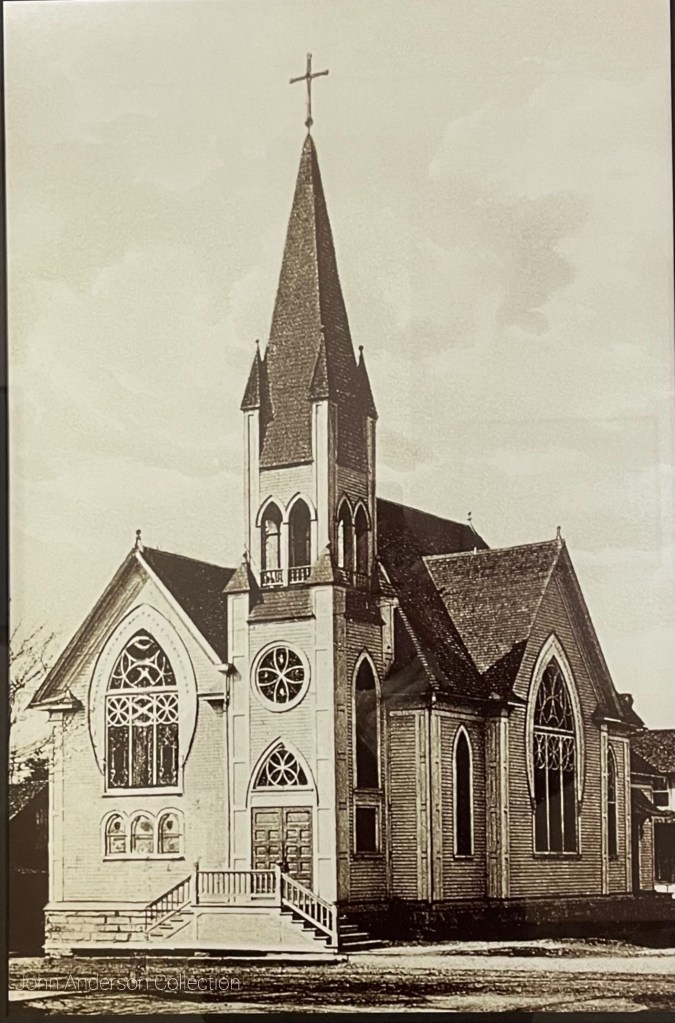
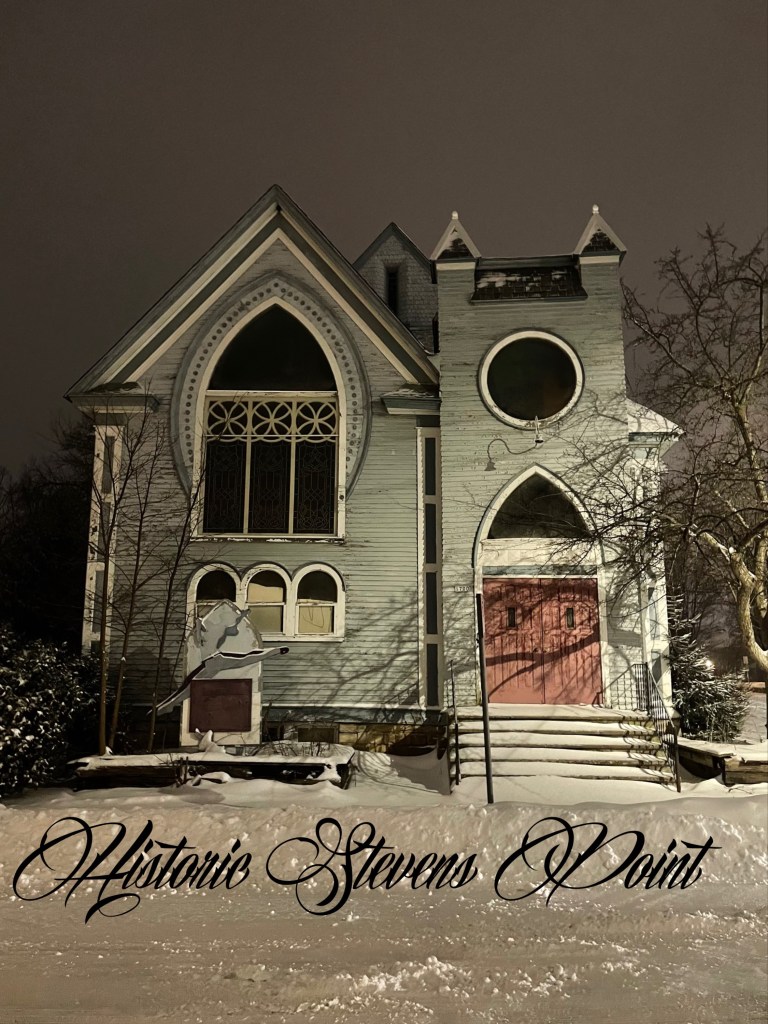
On a cold day in December, a few weeks back, Historic Stevens Point made a special visit to the abandoned church building awaiting its imminent demise at 1700 Strongs Avenue on the corner of Brawley Street. As soon as we noted that the city was looking for demolition bids on the neglected and abandoned Trinity Lutheran Church building we made special arrangements to gain access so that we could take the opportunity to document the beauty of not only the outside, but the inside of the church, as it stands today, before it is razed and forever removed from the landscape, but not the memories, of Stevens Point.

We made sure to bring along our new friend, Barry Calnan of the Calnan Design Group.

Calnan creates 360 degree walk through interactive virtual tours using Matterport cameras and services by capturing thousands of photos of a space in just moments. Anyone can hire him for any kind of idea where you may need or want a virtual tour like a real estate walk through, insurance claim, restoration project, construction build, or facilities management. He can capture the entire building as it stands at the moment to create a fully immersive interactive virtual reality 360 3d tour. It’s quite amazing. People, the future is now!

Calnan, who is a Texas to Stevens Point transplant and has lived as far away as Dubai, says he loved Stevens Point from his first day in town. Stevens Point seems to have that affect on people. And it clearly shows that he does love the town. He recently began a project called Virtual Point where he has created a number of free to view virtual reality 3d tours of places and spaces in Stevens Point like the now razed Belke Building and the new Cultural Commons at Pfiffner Pioneer Park.

Our day at the church was a cold one with a temperature of 12 degrees outside, but Calnan was able to get his cameras and equipment working to collect the thousands of photos it takes to create the virtual reality scans. During the hour or so that Barry was busy with his equipment capturing images, we took the time to video some of the property as well. You can see that raw footage with commentary of the interior and exterior of the building currently on our Historic Stevens Point Facebook page as well as a recent recorded live presentation about the unfinished research we are doing on the building. We will eventually edit and embed those videos into a blog post for non Facebook users.

Calnan is also available for 3D Design, and 3D printing in the Central Wisconsin area and was the main 3d printing volunteer during a collaboration with CREATE Portage County printing protective face shields for the local medical community at the start of the COVID pandemic. With a background in engineering design and 3d printing, Calnan says the move to 3d data capture and virtual reality tours came quickly. He explained that he has been interested in creating these virtual reality tours on a volunteer basis as examples of what he can create to help promote the technology to the public and its endless possibilities.

The scans that Calnan creates can be used in a multitude of manners. As historians with a mind for preservation, we instantly saw the use of this technology as not only a manner to document historic buildings in the Stevens Point area, but also as a continuing way to engage the community in historic preservation, advocacy, and appreciation. There is so much that can be done with the scans that Calnan creates combined with the historic information we can provide. Together we can not only virtually preserve history, but make history at the same time. And by doing so we can save history for future generations, which is really one of the basis of historic preservation on whatever level.

“Historic preservation is not about the past, it is about building a better future together.” —Katherine Malone-France, chief preservation officer of the National Trust for Historic Preservation.

You can find the Calnan Design Group’s full set of virtual reality tours and more information about his services at Virtual Point, Virtual Reality Tours and Calnan Design Group.

Click the blue text to take a virtual step into history with these select virtual reality historical tours from Calnan Design Group including the Trinity Lutheran Church Building, The Historic Fire House on Strongs, PCHS’s headquarters the Historic Beth Israel Synagogue and the now razed Belke Lumber Company Building of which we have written a timeline on it’s infamous past.

Historic Stevens Point would like to extend our gratitude to Mayor Mike Wiza for not only allowing us access to the building but also connecting us to Calnan. Without that connection we would not have been able to put this collaboration together to be able to give the public access to this incredible beautiful Gothic Renaissance church building and to document its last days for future researchers, historians, and history lovers alike.

We look forward to our next collaboration together! If you have ideas for scans of a historic property in the Stevens Point or Portage County area, please let us know!

Email contact@historicstevenspoint.com

Trinity Lutheran Church Building
John Anderson Postcard Collection circa 1910

Stevens Point’s Lost Carnegie Library: Part 4

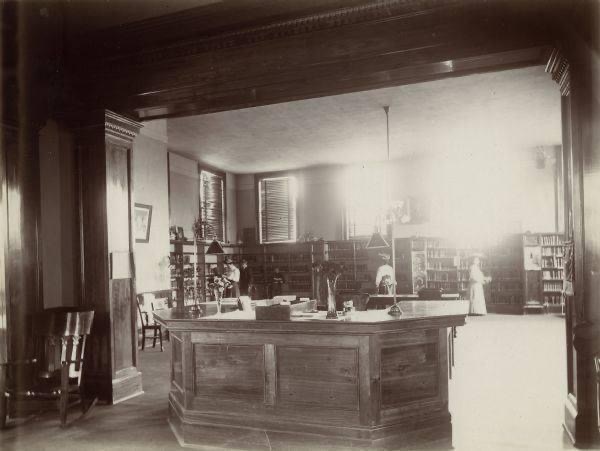
Before the library could officially open to the public, the extensive collection of over 5,000 books and reading materials had to be moved from their old crowded home on the shelves in the rooms above Taylor’s to their new more permanent home on the brand-new freshly varnished shelves just down the road. No records have been found that describe exactly how these books were moved, but one can imagine stacks carried piled to volunteers chins and carts piled high precariously pushed across the rough cobblestone street from one building to the next to finally put in order and shelved by Miss Catlin and Mrs. Dunegan themselves.

Mike Dominowki photo, UWSP / PCHS Archives

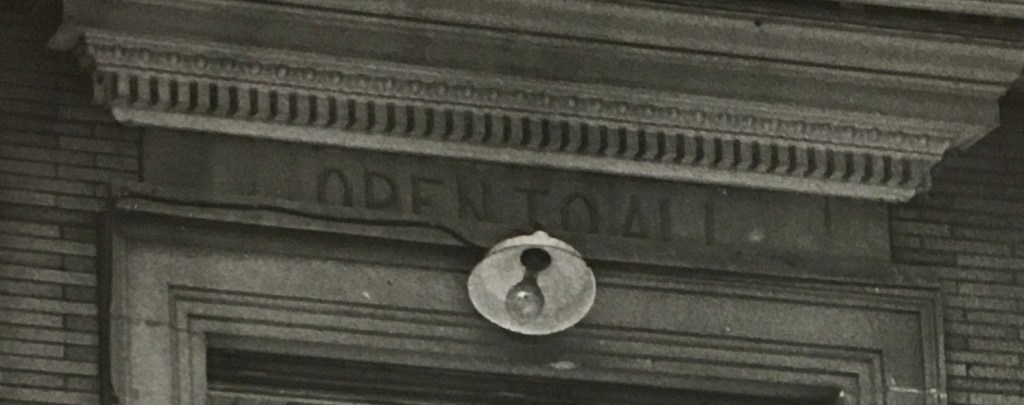
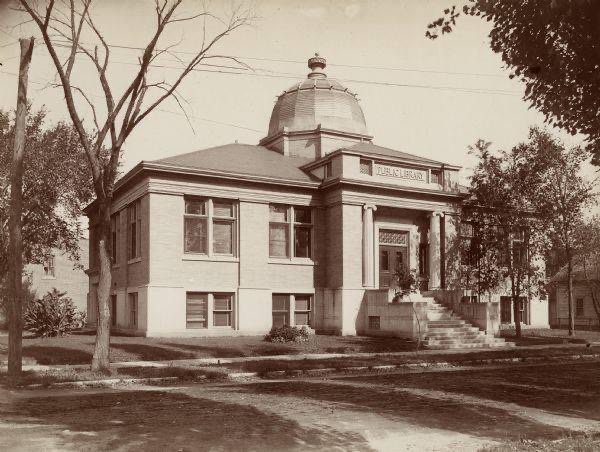
The afternoon of June 1st the doors of Stevens Point’s new Carnegie Library opened to the public for the first time. The words “Open To All,” etched in stone above the entrance greeted the city’s new patrons encouraging all to enter and enjoy. The Union Band was set up in the lobby and an art exhibit of local children’s drawings hung on display in the new children’s reading room.  Decorations were hung sparingly not to overshadow the real stars of the event, the building itself and the books on their new shelves.

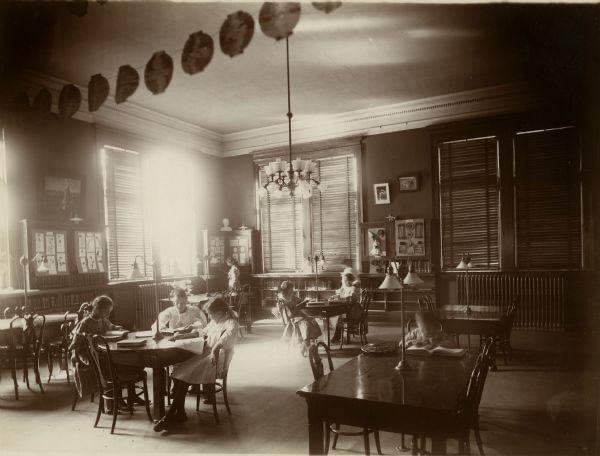
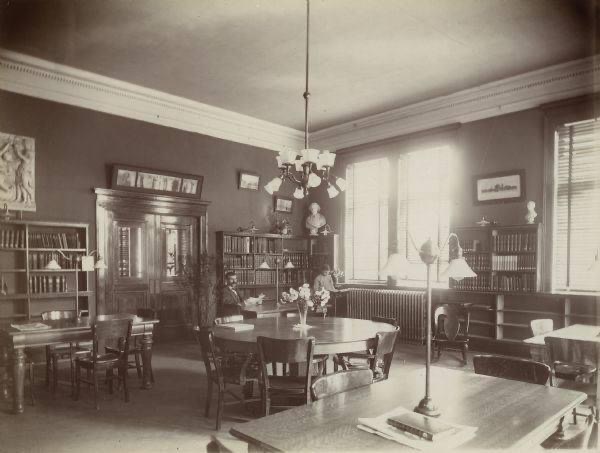
At completion the new library was just as architect drawings showed. The handsome Neo-Classical Revival style building constructed from gray stone and brick was built with a “high basement” to match the height atheistic of the neighboring two-story buildings. The ample stone stairs led to the “broad and inviting” entrance flanked with enormous ionic Roman pillars. Heavy wood doors opened to a wide vestibule with the “librarian’s desk being at the north end of this space.” To the left was a spacious reading room filled with tables and chairs, which housed reference books and the directors’ room. Located in the right wing was the children’s room as well as space for the librarian’s office. The heavily varnished interior woodwork, made from red birch, gave off a warm inviting glow.

A rotunda and dome graced the center of the ceiling and roof line of the building with a skylight made from green art glass specially shipped in by train. It must have been a lovely sight to see the light shine through leaving patterns on the polished wood floors. The original plan called for a narrow gallery around the rotunda, “which is approached by a stairway from the vestibule. The walls of this gallery will be arranged with the idea of using the space for hanging pictures,” making it an engaging focal point when looking to the ceiling.

One of the only known photos of the interior glass of the rotunda. Stevens Point Journal Photo circa 1960

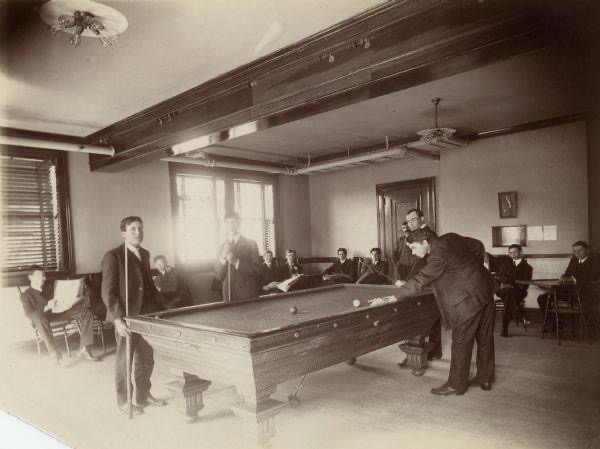
The lower level contained “a lecture hall, a club room for women and a newspaper reading room for men,” as well as a kitchen, storeroom, boiler and fuel rooms, and a librarian’s work room. At some point a carom or French billiards table was moved into the men’s area where boys and men alike gathered to play. Various meetings were held by the ladies in their specified area as well. The Women’s League was very involved in the fundraising for the library and held a permanent contract for their space. Separating the main lower wings of the building was a large open corridor with all three areas able to connect by opening the sliding doors create one large room. The large room was intended to be used for events and lectures for community members.

Gifts from community members were given to the new building as well such as a large potted palm plant and a life-size bust of Shakespeare donated by the graduating class of 1904. But one of the greatest and most beautiful gifts to the library was the donation of a pair of heavy decorative brass and iron doors, a matching iron transom for above the doors as well as a pair of tall ornate brass lamp posts in 1918. Purchased with money left by Andrew Weeks, the doors gave the library quite the grand entrance. Weeks, who had sat on the library board and building committee during the years when the library was being planned. He had also helped raise money for the library fund early on by selling logging land in the Northwoods and then donating it to the cause while the city was preparing to ask Carnegie for the initial donation.

Stevens Point’s Carnegie Library Circa 1914, Wisconsin Historical Society

Coming from a successful lumber and logging family, Weeks died with a significant fortune and left for his time and left money specifically for the Stevens Point Carnegie Library. After his death, his sister ensured that the community received the designated $5000 donation in her brother’s name and helped choose the doors, transom, and lamps. The Weeks family obviously thought it was important that the Stevens Point Public Carnegie Library have a grand entrance.

Read Part 1 here / Read part 2 here Read Part 3 here / Read Part 4 here/ Read Part 5 here

Stevens Point’s Lost Carnegie Library: Part 3

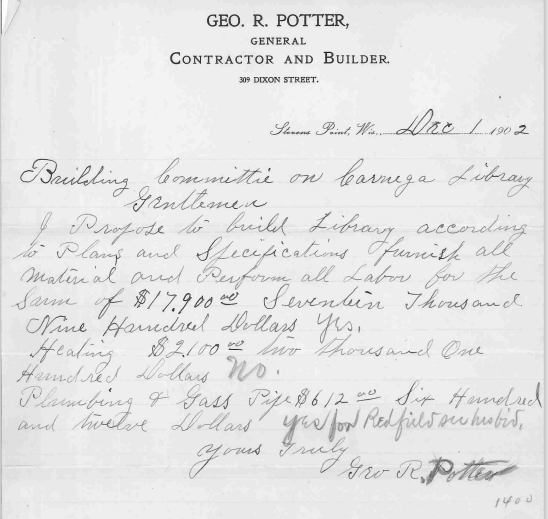
With some dispute, land was eventually obtained at the southwest corner of Strongs Avenue and Clark Street. Soon after Architect Henry A. Foeller, of Green Bay was hired and drawings were made. Bid requests for construction of the library began in October. By December of 1901, George Potter’s $17,900 bid, not including plumbing, heating, nor finishing touches, officially had been accepted.

Courtesy of the Portage County Public Library

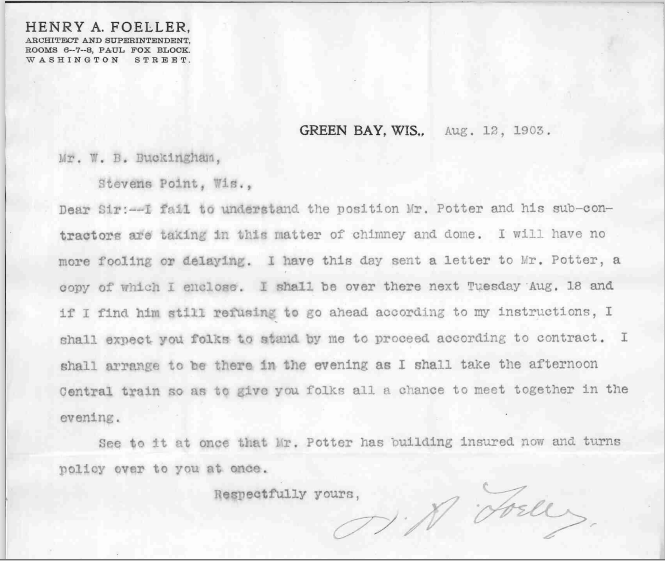
Whereas things seemed to be running smoothly from afar, communications from Foeller show that there were issues between his design and what the contractor produced, as well as other issues with the pace of Potter’s work. There were several setbacks during construction that irritated Foeller enough that he wrote a few strong worded letters regarding the contractor’s work. In a letter dated January 11, 1904 Foeller tells Potter that he “find[s] it useless to urge you on since you seem to take your own time regardless of all notices.”

Aug 12, 1903, “I will have no more fooling or delaying.” Architect Henry Foeller in regards to George Potter. Courtesy of the Portage County Public Library

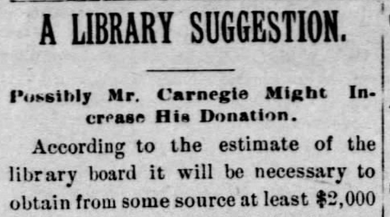
It also seems that it was realized early on that the city would be short funds to reach completion, but work continued to move forward until the money was finally needed. Documents show that after balancing the budget for the building, including monies set aside for plumbing, heating, and the interior, that the city would need $1,858 more or the contractor would lose money. When the time came near completion, there was much discussion as to where to obtain the money.

Stevens Point Daily Journal, Dec 26, 1902

Eventually, Common Council and the Library Board chose to ask Carnegie for more money:

“And while the library spirit is excellent in Stevens Point, and our library circulation is larger than in any other city in Wisconsin of the population of Stevens Point, yet the people are poor, and the additional money, small as it may seem, is hard to get, almost impossible at this time.”

-The Library Board and Stevens Point Common Council to Andrew Carnegie, March 1904

Fundraising continued in the form of a Board of Education vs City Council baseball game to pay for the cement walks and landscaping on the new grounds. Carnegie thankfully agreed to donate the additional funds, and completion pressed on. Opening day plans moved forward.                         

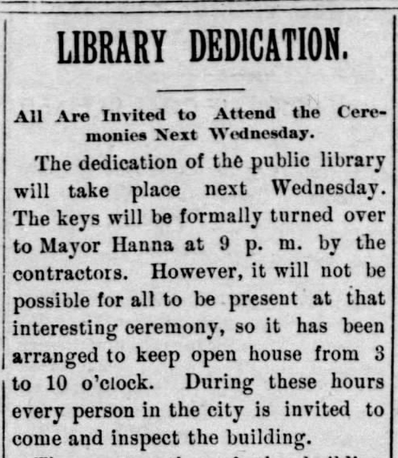
Stevens Point Daily Journal, April 18, 1904

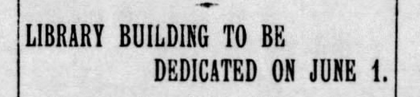
Even with setbacks, two years to the month after Dr. Southwick received the letter from Carnegie’s secretary, the Library Board declared the building finished enough for them to move in and hold meetings. Over the months of April and May they raised the librarian’s monthly salary from $25 to $45, hired an additional assistant librarian, hired a janitor with a $25 monthly wage, and set a reception and dedication date for June 1, 1904. In May, Henry Foeller made a last visit to inspect the building, and as architect he finalized the project, only commenting about the paint job on the outside metal pieces.

And once again, the books were moved.

Stevens Point Daily Journal, May 27, 1904

Read Part 1 here / Read part 2 here Read Part 3 here / Read Part 4 here/ Read Part 5 here